Dal Recipe for Toddlers: Easy, Mild & Nutritious (With Age-wise Tips)
Dal Recipe for Toddlers: Easy, Mild & Nutritious (With Age-wise Tips)
🟢 Quick Facts
•By Tiny Tummies Food
•Updated August 2026
• 9 min read
|
Age |
8 months–3 years |
|---|---|
|
Meal Type |
Lunch, dinner, protein side |
|
Prep Time |
15–20 minutes |
|
Difficulty |
Easy |
|
Best For |
Vegetarian households, batch prep, picky eaters |
By the time my son turned two, I had made dal for toddlers so many times I could practically do it with my eyes closed — and then, without warning, he decided he hated it. Not “picked at it” hated it. Full rejection, arms crossed, the works. For about three weeks, dal was apparently the enemy. Then one random Tuesday, he ate an entire bowl like nothing had ever happened and asked for more the next day. I still don’t know what changed. If you’re in the middle of your own toddler-versus-dal standoff right now, I promise you’re not doing anything wrong.
Dal is one of those foods that’s genuinely worth sticking with, even through the phases where it gets rejected, because it does so much nutritional work in one simple bowl. This guide walks through a base recipe that works well for toddlers, how to adjust it as they grow, and what to do on the weeks when dal is, apparently, the worst thing you could possibly serve.
Why Dal Is Good for Toddlers?
Lentils are a useful plant-based source of protein, fiber, and other nutrients, and dal is an easy way to serve them in a toddler-friendly texture. Cooked down properly, dal becomes soft and easy to mash, making it simple to adjust for toddlers who are still developing their chewing skills.
It’s also genuinely flexible. Dal works as a side dish spooned over rice, mixed into khichdi, mashed with roti, or even served on its own in a small bowl as a kind of savory soup. For vegetarian families in particular, dal can be a useful part of the day’s protein choices, alongside foods such as beans, chickpeas, dairy, eggs, tofu, or other suitable options. Our khichdi for babies guide covers the version where dal and rice are cooked together, if you want a complete one-bowl option instead of serving dal on its own.
Basic Dal Recipe for Toddlers
This is a simple, mild version meant for toddlers — not the more heavily spiced dal you might make for the rest of the family, though the two aren’t far apart.
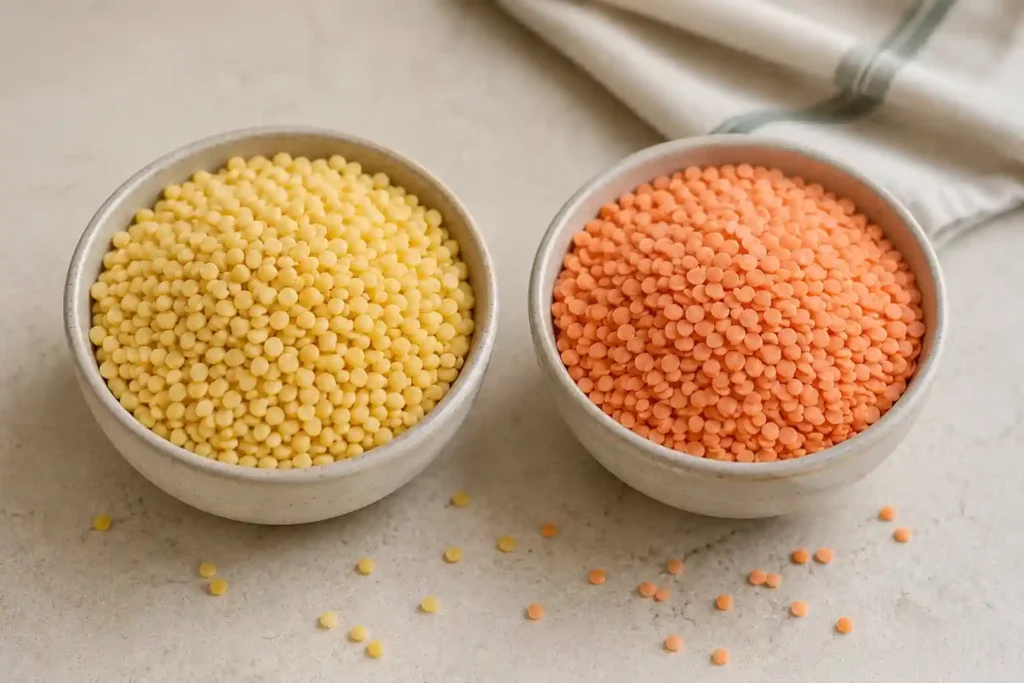
Ingredients: Half a cup of yellow moong dal or masoor dal, 1.5 cups water, a pinch of turmeric, half a teaspoon ghee or oil, a small pinch of cumin seeds (optional).
Method: Rinse the dal thoroughly until the water runs mostly clear. Add it to a pot or pressure cooker with the water and turmeric. Pressure cook for 3 to 4 whistles, or simmer on the stovetop for about 20 minutes, stirring occasionally, until the dal is completely soft and starting to break down into a slightly thick, porridge-like consistency. If using cumin, warm the ghee in a small separate pan, add the cumin seeds until they sizzle for a few seconds, and stir this into the finished dal. Mash lightly with a spoon if your toddler needs a smoother texture, or leave it as is for older toddlers managing more texture on their own.
That’s the whole thing. For toddlers, keep added salt modest, especially when other foods in the meal already contain sodium.
How to Adjust Dal Texture by Age?
Around 8 to 10 months, if your baby is already eating complementary foods, keep dal very soft and adjust the consistency to their current feeding skills. Some babies may manage thicker textures as their eating abilities develop. This is usually served as part of a mixed meal, like stirred into khichdi or mashed rice, rather than as a standalone dish just yet.
Around 12 months, you can gradually leave dal a little thicker and more textured if your child is comfortable managing those textures, and this is a reasonable point to introduce the light tempering of cumin seeds in ghee described above. A very small amount of well-cooked garlic can also be used if it suits your child’s diet and feeding stage.
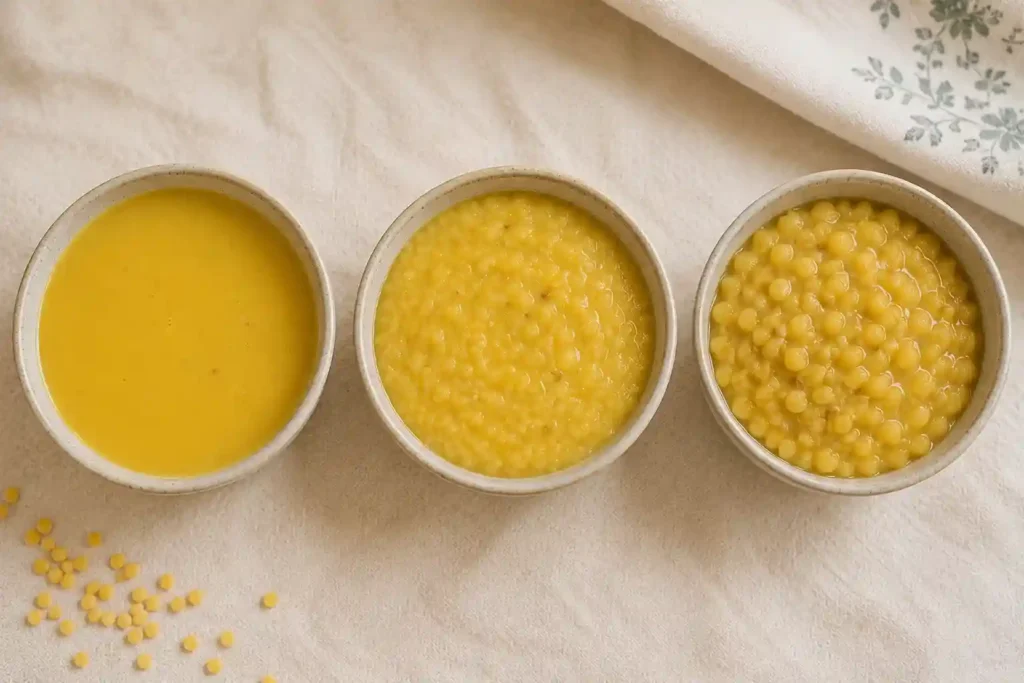
From 18 months onward, As your toddler becomes more comfortable with different textures, you can gradually serve a thicker, more traditionally textured dal. This is also a good window to start introducing a wider range of dals — toor dal, chana dal, mixed dal — beyond just the milder moong and masoor varieties toddlers usually start with.
By age 2 to 3, you can gradually adapt the dal toward the family version, while keeping the texture and seasoning appropriate for your child’s preferences and eating skills.
Variations to Keep Things Interesting
Once the base recipe is familiar, small changes go a long way without turning it into a completely different dish.
Dal with spinach stirs finely chopped spinach into the pot during the last few minutes of cooking, adding vegetables and a mild flavor that blends easily into the dal.
Dal with grated carrot or pumpkin cooks a small amount of grated vegetable directly into the lentils, adding natural sweetness that can make dal more appealing to toddlers going through a savory-food-rejecting phase.
Dal khichdi simply combines the dal with rice to make a simple one-bowl meal — a familiar one-bowl option in many South Asian households, and a natural next step if your toddler already likes both dal and rice separately. Our khichdi for babies guide has the full version of this.
Dal soup with a squeeze of lemon thins the dal out slightly and adds a small amount of lemon juice once it’s cooled a bit, which some toddlers respond well to, likely because of the brighter flavor compared to a heavier, thicker dal.
How Much Dal Should a Toddler Eat?
There’s no strict rule here, and start with a small toddler-sized portion, such as a few tablespoons, and offer more if your child is still hungry. Appetite can vary significantly from one meal to the next. Some toddlers will happily eat more, some will eat far less on any given day, and both are generally fine as long as overall intake across the week looks reasonably balanced.
Rather than tracking how many times your toddler eats dal each week, focus on offering a variety of protein-rich foods over time. Dal can be one of those choices alongside foods such as beans, eggs, dairy, tofu, meat, fish, or other foods your family includes.
Common Dal Mistakes (and Why They Happen)
One of the more common issues is cooking the dal too thin for an older toddler, essentially keeping the 8-month consistency going well past the point where a toddler is ready for more texture — it happens easily when a recipe “works,” so there’s no real pressure to change it. The opposite also happens, particularly when dal is made for the whole family and simply portioned out for the toddler without adjusting texture, leaving it too thick or too heavily spiced for their stage.
Adding salt earlier than necessary is another common one, usually because a dish that tastes under seasoned to an adult is often perfectly acceptable to a toddler who hasn’t built up the same expectations around flavor. Skipping the tempering is completely fine if your toddler prefers a simpler version. If you choose to use ghee and cumin, a small amount can add flavor and some fat.
A less obvious mistake is serving the exact same dal, the exact same way, for months on end and then being surprised when a toddler suddenly refuses it. Even foods a toddler generally likes can benefit from small rotation — a different lentil, a vegetable stirred in, a slightly different consistency — just enough to keep it from becoming so repetitive that it eventually gets rejected out of sheer boredom rather than genuine dislike.
How to Store and Reheat Dal?
For a toddler-friendly meal-prep approach, refrigerate cooked dal promptly and use it within 3 to 4 days, or freeze it if you want to keep it longer. Dal freezes well, so you can portion it into small containers and freeze what you won’t use within the refrigerator storage window. When reheating, dal tends to thicken as it sits, so adding a small splash of water while reheating on the stove or in the microwave usually brings it back to the right consistency. Making a larger batch on a weekend and portioning it out across a few days’ worth of toddler meals is one of the easier ways to take dal off your daily to-do list.
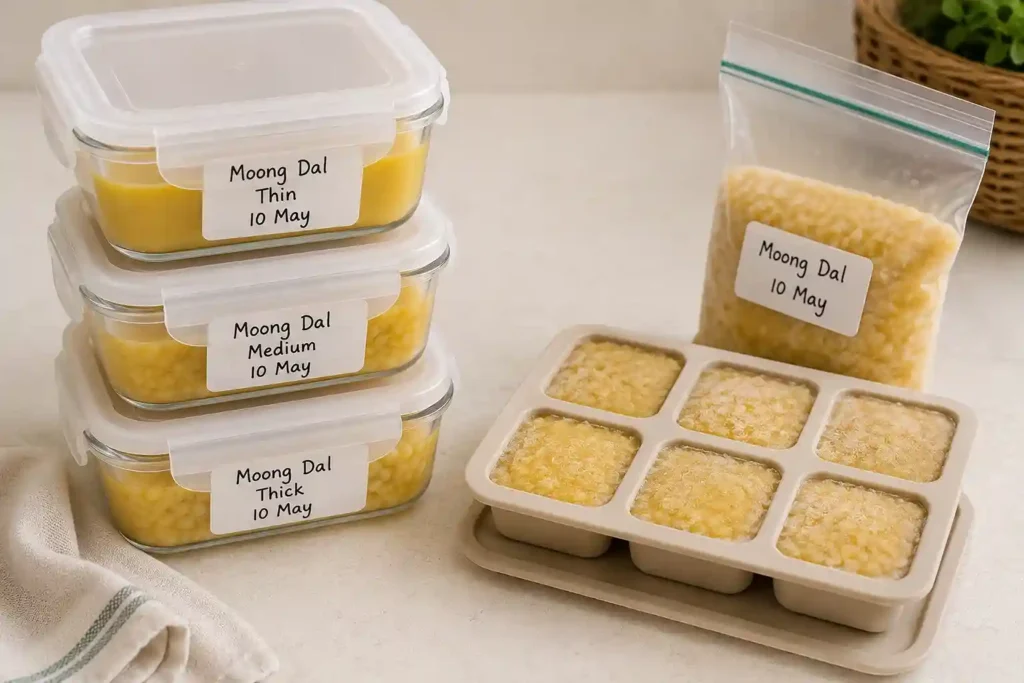
Freezing dal in small, single-serving portions — an ice cube tray works well for younger toddlers, small containers for older ones eating bigger portions — means you’re never stuck thawing more than you actually need for one meal. Our baby food recipes guide covers similar batch-freezing methods if you want to build this into a wider freezer rotation alongside purees and khichdi.
Toddler Dal Safety Tips:
- Cook lentils until completely soft.
- Adjust thickness and texture according to your child’s eating skills.
- Avoid whole hard seeds for younger children; use ground spices where appropriate.
- Let hot dal cool to a comfortable temperature before serving.
- Refrigerate leftovers promptly.
- Don’t leave cooked dal at room temperature for extended periods.
- Reheat leftovers thoroughly.
- Always supervise young children while eating.
When Your Toddler Refuses Dal
At some point, dal will get rejected, sometimes for no identifiable reason, sometimes right after a week where your toddler seemed to love it. This is extremely common and rarely means anything has gone wrong with the recipe or with your toddler.
Ellyn Satter’s division of responsibility framework applies well here too: your role is deciding what’s offered, when, and where, while your toddler decides whether to eat it and how much. Continuing to serve dal in a calm, low-pressure way — even through a rejection phase — tends to work better over time than switching it out completely or pushing extra bites. Toddlers often circle back to foods they’ve previously refused, sometimes after weeks, sometimes seemingly overnight.
Some days your toddler will finish an entire bowl and ask for seconds. Other days, the same dal will get pushed away without explanation. A big meal and a tiny meal can both happen. What matters more is the overall pattern of eating rather than one individual meal. What actually matters is the pattern over time, not any single meal, no matter how personally you take that one rejected bowl.
Dal vs Other Toddler Protein Foods
It’s worth putting dal in perspective alongside the other proteins a toddler might be eating, mostly because it’s easy to either overrely on it or underrate it depending on your household’s habits. Dal provides plant-based protein along with other nutrients such as fiber and iron. It can be part of a balanced meal with rice, roti, vegetables, yogurt, eggs, meat, or other protein-rich foods. You don’t need to combine specific plant proteins at every meal; overall variety across the day matters more.
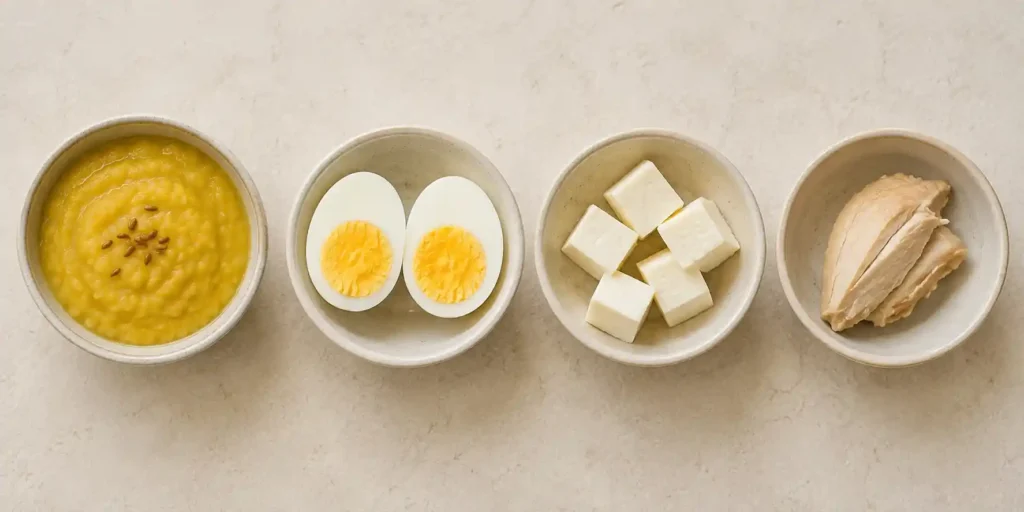
Compared to eggs or dairy, dal is naturally lower in fat, which is one of the reasons a spoon of ghee stirred in matters more than it might seem to — it’s not just about flavor, it’s genuinely helping meet a toddler’s higher relative fat needs. For vegetarian households, rotating dal with other plant proteins like beans, chickpeas, and paneer, alongside regular servings of dairy and eggs if those are part of your diet, tends to cover a toddler’s protein needs well across the week without needing to rely on any single food to do all the work.
None of this means dal needs to be measured or tracked precisely — it’s more useful as a general sense of where dal fits, so a diet built heavily around it feels like a reasonable, well-rounded choice rather than something to second-guess.
Frequently Asked Questions
One Last Thing
Dal doesn’t need much to earn its place in a toddler’s regular rotation — a handful of lentils, a little turmeric, a spoon of ghee, and some patience through the inevitable phases where it falls out of favor. It’s simple, it’s genuinely nutritious, and it scales easily from a thin, mashed first food all the way up to the same dal the rest of your family eats.
Keep it in rotation, adjust the texture and spice as your toddler grows, and don’t read too much into the weeks it gets rejected. It tends to come back around.
This article is for general informational purposes only and does not replace advice from your child’s pediatrician or a registered dietitian. If you have any concerns about your toddler’s nutrition, growth, or feeding, please speak to a qualified healthcare professional.
Sources & References
- CDC — When, What, and How to Introduce Solid Foods — useful for age/readiness and texture guidance.
Supports variety, protein foods, lentils, beans, vegetables and healthy fats. - WHO — Complementary feeding
- FDA — Once Baby Arrives: Food Safety for Moms-to-Be — useful for homemade baby-food storage.