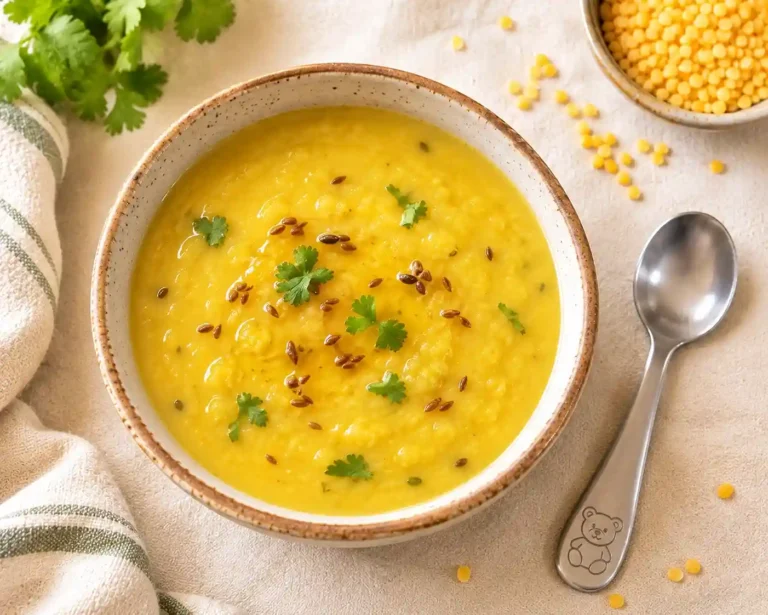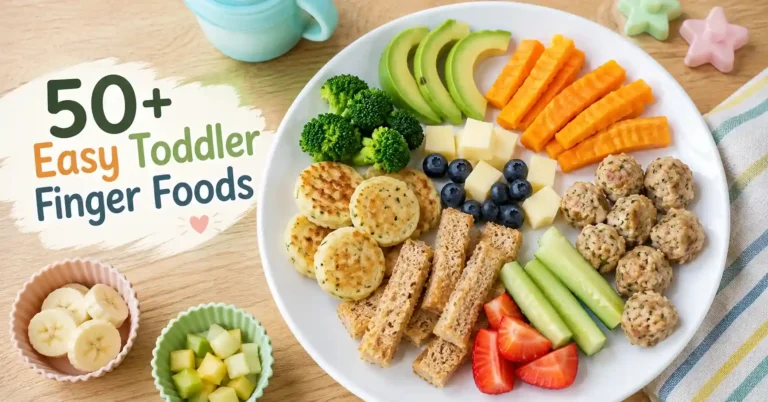

Khichdi for Babies: The Complete Guide, Recipe & Age-by-Age Variations
🟢 Quick Facts
•By Tiny Tummies Food
•Updated August 2026
• 13 min read
|
Age |
6–24+ months |
|---|---|
|
Meal Type |
Lunch, dinner, first foods |
|
Prep Time |
20–25 minutes |
|
Difficulty |
Easy |
|
Best For |
New parents starting solids, South Asian households, batch prep |
If you’re looking for khichdi for babies, you’ve probably already heard the word from your own mother or grandmother, long before any parenting blog told you it was a “superfood.” My mother made khichdi for both of my kids the exact same way she made it for me — moong dal, rice, a pinch of turmeric, and a spoon of ghee stirred in right at the end.
When I asked her once if there was some special trick to it, she just laughed and said “beta, it’s khichdi, there’s no trick, that’s the whole point.” She wasn’t wrong. Somewhere between all the baby food apps, feeding charts, and “10 superfoods for baby brain development” articles online, it’s easy to forget that one of the simplest first foods many families already know and enjoy was sitting in most of our kitchens the entire time.
If you’re wondering whether khichdi is actually a good first food, or you just want a reliable recipe that won’t have you second-guessing every step, this guide covers both — plus how the recipe should change as your baby grows, and where people tend to go wrong with it.
Why Khichdi Works So Well as a First Food?
Khichdi has been feeding babies across South Asia for generations, long before “baby-led weaning” or “stage 1 puree” were terms anyone used. Part of the reason it works so well is simple biology — rice and moong dal cooked together become soft and easy to mash, making the texture easy to adapt as your baby develops feeding skills. The basic version is mild and easy to season without added salt, which makes it simple to adapt for a baby’s stage of feeding.
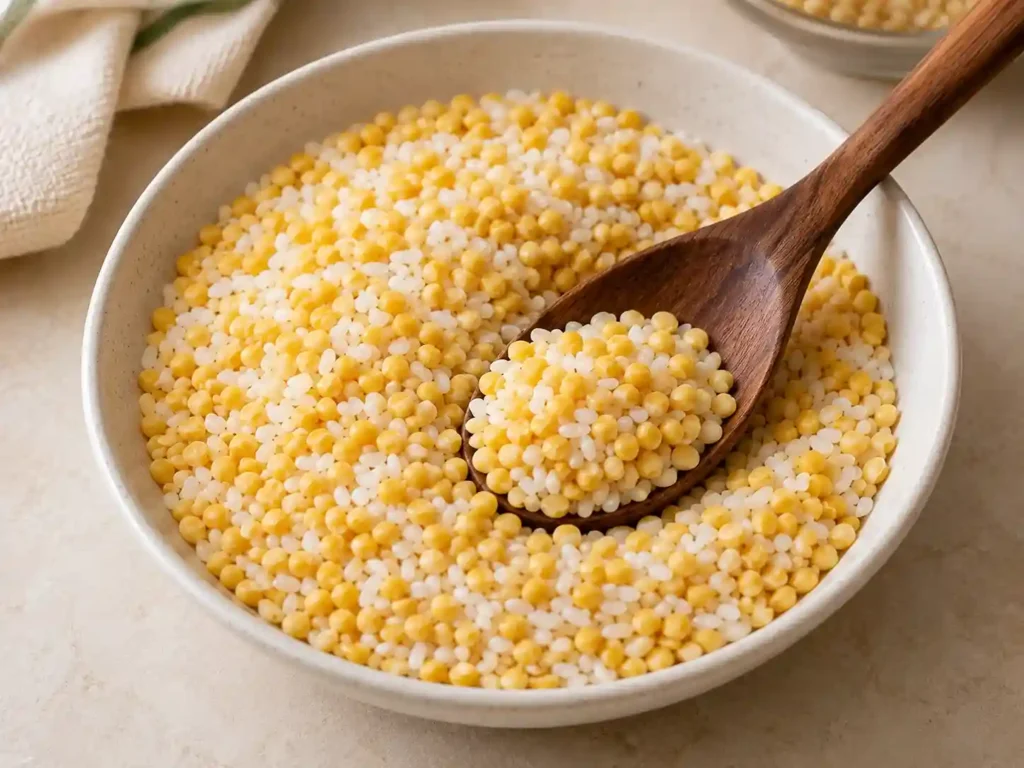
It can make a simple one-bowl meal, with carbohydrates from the rice, plant-based protein from the dal, and some fat if you choose to add ghee. Add a vegetable or two, and you’ve got most of a meal covered without needing three separate dishes.
There’s also something to be said for cultural continuity here. A lot of “first foods” content online defaults to a fairly narrow, Western list — purees of sweet potato, avocado, banana — which are all perfectly good options, but they’re not the only ones. If your own family grew up on khichdi, there’s no real reason your baby’s first foods need to look different just because most parenting blogs assume otherwise. Our broader baby food recipes guide covers this same idea across other first foods too.
When to Start Khichdi?
The general guidance for starting any solid food, khichdi included, is around 6 months, once a baby is showing real signs of readiness. That usually means being able to sit upright with decent support, having lost the reflex that automatically pushes food back out with the tongue, and showing genuine interest in food — reaching for it, watching you eat, opening their mouth when a spoon comes near.
At the very start, khichdi should be cooked soft and slightly loose, closer to a thick soup than the fluffier, more separate-grained khichdi adults might eat. As your baby gets more practice swallowing and handling texture, you can gradually reduce the water and let it thicken up.
If your baby was born prematurely or has any known feeding or digestive concerns, it’s worth checking with your pediatrician before starting solids, since the right timeline can look a little different.
Basic Khichdi Recipe for Babies (6+ Months)
This is the base recipe — everything else in this guide is really just a variation on it.
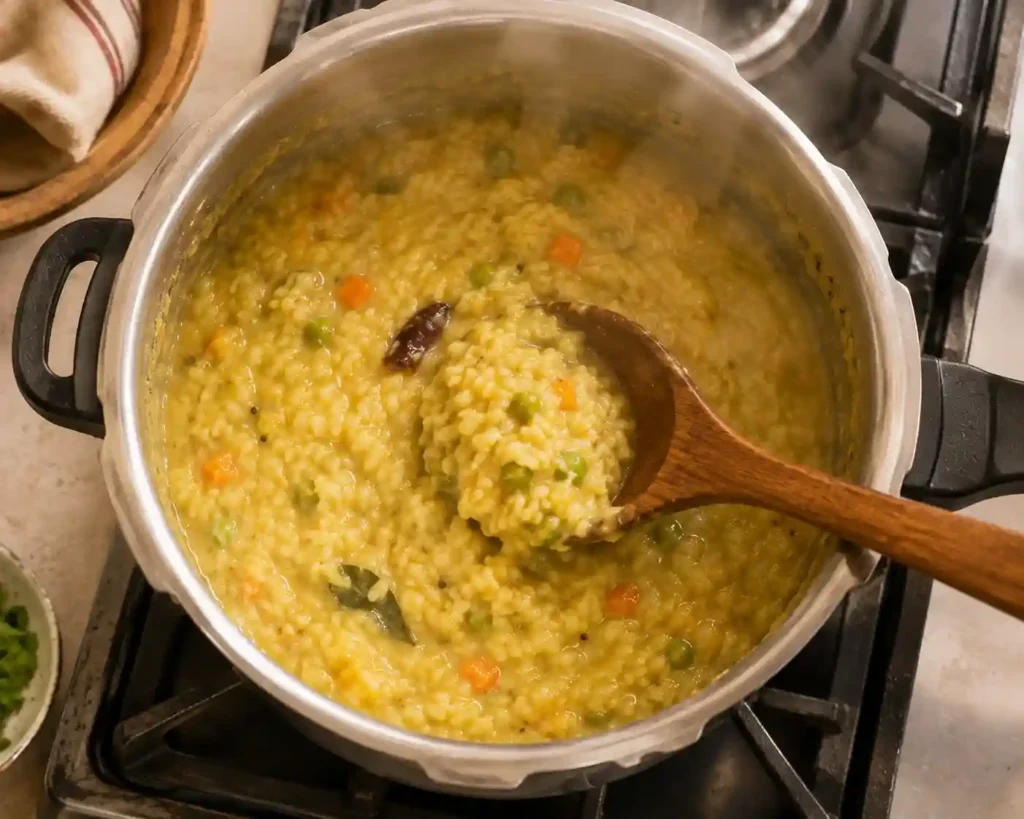
Ingredients: 2 tablespoons rice, 2 tablespoons yellow moong dal (split, husked), a pinch of turmeric, 1 to 1.5 cups water, a small spoon of ghee.
Method: Rinse the rice and dal together until the water runs mostly clear. Add them to a pot or pressure cooker with the turmeric and water. If using a pressure cooker, cook for about 4 to 5 whistles on medium heat. On the stovetop, simmer covered for around 20 to 25 minutes, stirring occasionally and adding more water if it looks too thick, until both the rice and dal are completely soft and starting to break down.
Mash with the back of a spoon or blend lightly, depending on how much texture your baby is ready for. Stir in the ghee once it’s cooled slightly, and check the temperature carefully before serving — the center of a freshly cooked pot holds heat longer than it looks like it would.
That’s genuinely the whole recipe. No salt is needed at this stage, and the turmeric is more for its mild flavor and traditional use than anything else — it’s not going to make or break the nutrition of the dish either way.
Khichdi by Age: 6, 8, 10, and 12+ Months
These age ranges are general examples, not strict milestones. Babies develop feeding skills at different rates, so adjust the texture and consistency to what your child can safely manage.
Around 6 months, khichdi should be thin and smooth enough to eat off a spoon without much chewing required — think loose porridge rather than rice. This is also a good stage to introduce it as a single, fairly plain dish before adding vegetables, just to keep things simple while your baby is still getting used to new textures generally.
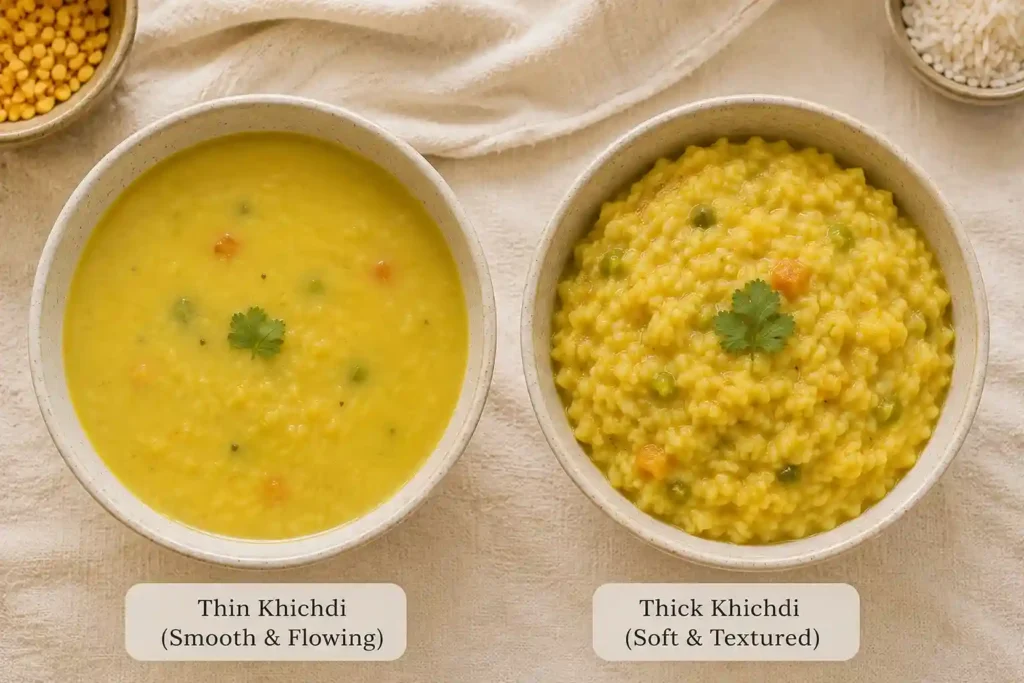
Around 8 months, you can start thickening the khichdi slightly and adding finely mashed vegetables like carrot, pumpkin, or spinach. If your baby can sit safely, bring food to their mouth and is ready for finger foods, you can offer a small amount of soft, mashable khichdi in a form that matches their feeding skills.
Around 10 months, khichdi can take on a slightly thicker, more textured consistency, closer to a risotto than a soup. This is often when babies start showing more interest in feeding themselves, so serving it slightly less mashed, with small soft vegetable pieces mixed through, tends to work well.
By 12 months and beyond, khichdi can look much closer to what the rest of the family eats — proper grains of rice, a bit more texture from the dal, and a wider range of vegetables. This is also roughly the age where very mild spices like a small amount of cumin or a hint of garlic can be introduced gradually, watching for any reaction each time something new is added.
Variations Worth Trying
Once the base recipe feels easy, there’s a lot of room to rotate flavors without changing the underlying method much.
Vegetable khichdi adds finely diced or grated carrot, pumpkin, spinach, or peas cooked directly into the pot along with the rice and dal, which softens them enough for even a younger baby to manage.
Moong dal and rice khichdi with paneer stirs in a small amount of crumbled paneer toward the end of cooking, adding protein and calcium and giving the khichdi a slightly different texture and flavor, or for vegetarian households looking to round out the protein content of the meal.
Sabudana khichdi, Sabudana can have a different texture from rice-and-dal khichdi, so if you offer it to a baby, make sure the pearls are cooked until very soft and prepare the dish in a texture your child can safely manage. Avoid serving whole, firm or sticky pieces that are difficult to swallow.
Masoor dal khichdi swaps the moong dal for red lentils, which cook down even faster and give a slightly different, milder flavor — a good option if you want variety without much extra effort.
Spinach and khichdi works well once your baby is past the very early stage — finely chopped spinach cooked directly into the pot adds a mild vegetable flavor and blends easily into the khichdi, which makes it an easy way to add a vegetable that some babies would otherwise refuse on its own.
Common Khichdi Mistakes (and Why They Happen)
It’s easy to assume khichdi is foolproof simply because it’s so traditional, but there are a few small things that trip people up more often than you’d expect. Making it too watery at later stages is one of the more common ones — parents often keep the very thin, 6-month consistency going for months out of habit, when their baby is actually ready for more texture and would probably do better with it. The opposite happens too, particularly with grandparents cooking for a slightly younger baby out of habit from raising older kids, where the khichdi ends up too thick and dry for a baby who’s only just started solids.
Adding salt early is another one that happens more from instinct than carelessness — a dish that tastes bland to an adult palate is often perfectly fine, even pleasant, to a baby who’s never had salt to compare it against. If you choose to include ghee, a small amount can add fat and familiar flavor. But ghee isn’t essential to every batch of khichdi, since babies can get dietary fat from a variety of foods.
None of these are really “mistakes” in the sense of doing lasting harm — khichdi is forgiving that way — but they’re worth knowing about if your baby seems to be plateauing on a version of the recipe that used to work fine.
Storing and Freezing Khichdi
For homemade baby food, refrigerate khichdi promptly and use it within 1 to 2 days. If you won’t use it within that time, freeze it in small portions. Portioning cooked khichdi into ice cube trays or small containers before freezing makes it easy to thaw exactly as much as you need for a single meal. For best quality and safe storage, label frozen portions with the date and follow current baby-food storage guidance. When reheating, adding a small splash of water helps bring it back to the right consistency, since it tends to thicken as it cools and sits. Reheat only the portion you plan to serve, stir thoroughly, and check that it is lukewarm before feeding.
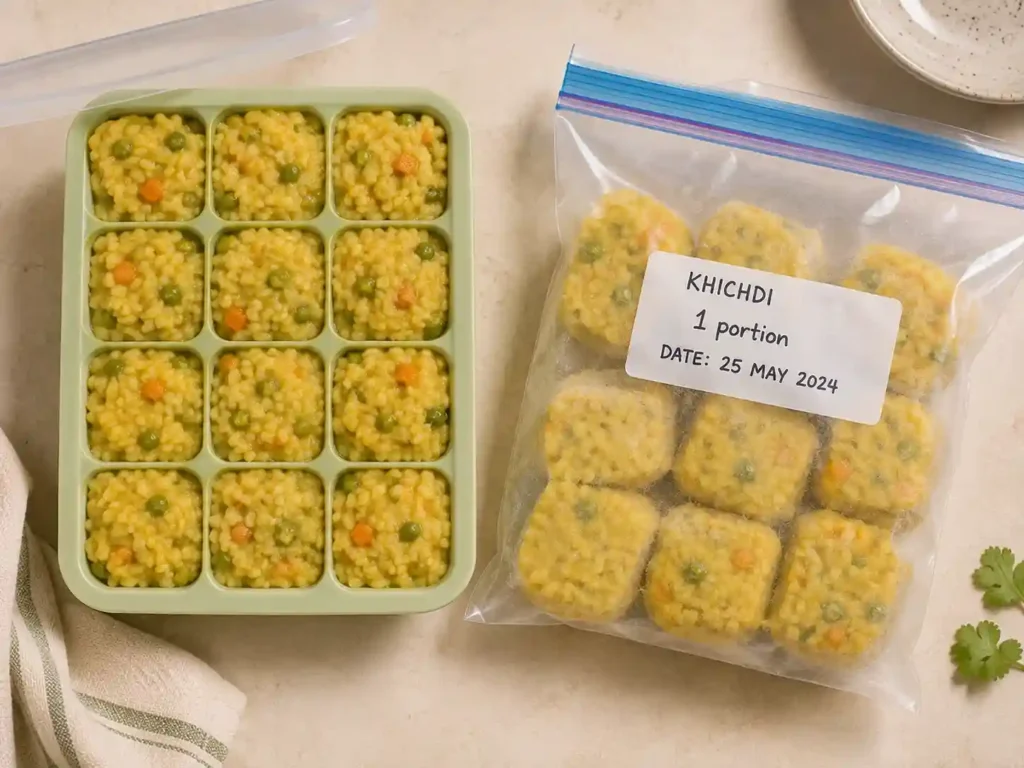
A useful habit is to cook a larger batch than you need for one meal — say, double or triple the base recipe — on a day you’re already cooking khichdi anyway, and freeze the extra in individual portions. This turns khichdi from a “cook it fresh every time” meal into one of the easiest things in your freezer rotation, right alongside dal and rice for busier days. Our baby food recipes guide covers similar batch-freezing tips for purees if you want to build out a bigger freezer stash across different foods.
Refrigerate or freeze cooked khichdi within 2 hours of preparation or serving, and within 1 hour if the temperature is above 90°F (32°C). If your baby has already eaten directly from a portion, discard leftovers rather than returning them to the refrigerator.
When Your Baby Refuses Khichdi
At some point, probably on a day you least expect it, your baby is going to refuse the exact bowl of khichdi they happily ate the week before. This is honestly one of the more universal experiences in feeding a baby, and it rarely means anything is actually wrong with the food or with your baby.
Feeding expert Ellyn Satter’s division of responsibility framework is genuinely useful to keep in mind here: your job as the parent is to decide what’s offered, when, and where, while your baby decides whether to eat it and how much. It sounds almost too simple to matter, but it takes real pressure off both sides once you actually lean into it. Continuing to offer khichdi in a low-key, no-pressure way, even after a few refusals, tends to work better in the long run than switching it out entirely or trying to coax extra bites.
Some days your baby may eat much more than usual. Other days, the same khichdi may be pushed away after one bite for reasons that make sense only to them. Both count. Both are fine. What matters far more than any single meal is the pattern across the week, and khichdi can always be offered again another day without pressure.
Food preferences can change from week to week. Continue offering familiar foods alongside other options without pressure, and let your baby decide whether and how much to eat.
Khichdi vs. Store-Bought Baby Cereal
It’s worth addressing this comparison directly, since so many first-time parents end up standing in a store aisle comparing a box of fortified baby cereal against the idea of just cooking khichdi at home. Store-bought infant cereals are often fortified with iron, which is genuinely useful, since iron needs increase around 6 months just as a baby’s natural stores start to run low. Khichdi on its own, especially the very early plain version, doesn’t match that fortified iron level unless the meal also includes meaningful sources of iron, such as meat, eggs, beans, lentils, or iron-fortified infant cereal.
That doesn’t make khichdi a lesser choice — it just means the two aren’t really solving the exact same problem. A reasonable approach many households land on is using khichdi as a genuine meal, full of variety, flavor, and cultural familiarity, while making sure iron-rich foods like dal, spinach, or meat are also showing up regularly across the week, whether inside the khichdi itself or in other meals. Families can include both iron-fortified infant cereal and home-cooked foods such as khichdi as part of a varied complementary-feeding pattern.
Frequently Asked Questions
One Last Thing
Khichdi has been doing this job — feeding babies gently, simply, and well — for a lot longer than any modern feeding guide has existed, and there’s a reason it’s stuck around. It doesn’t need to be fancy, it doesn’t need a long ingredient list, and it definitely doesn’t need to compete with the more elaborate baby food recipes you’ll find online. Rice, dal, a little turmeric, and a spoon of ghee will get you most of the way there at any stage.
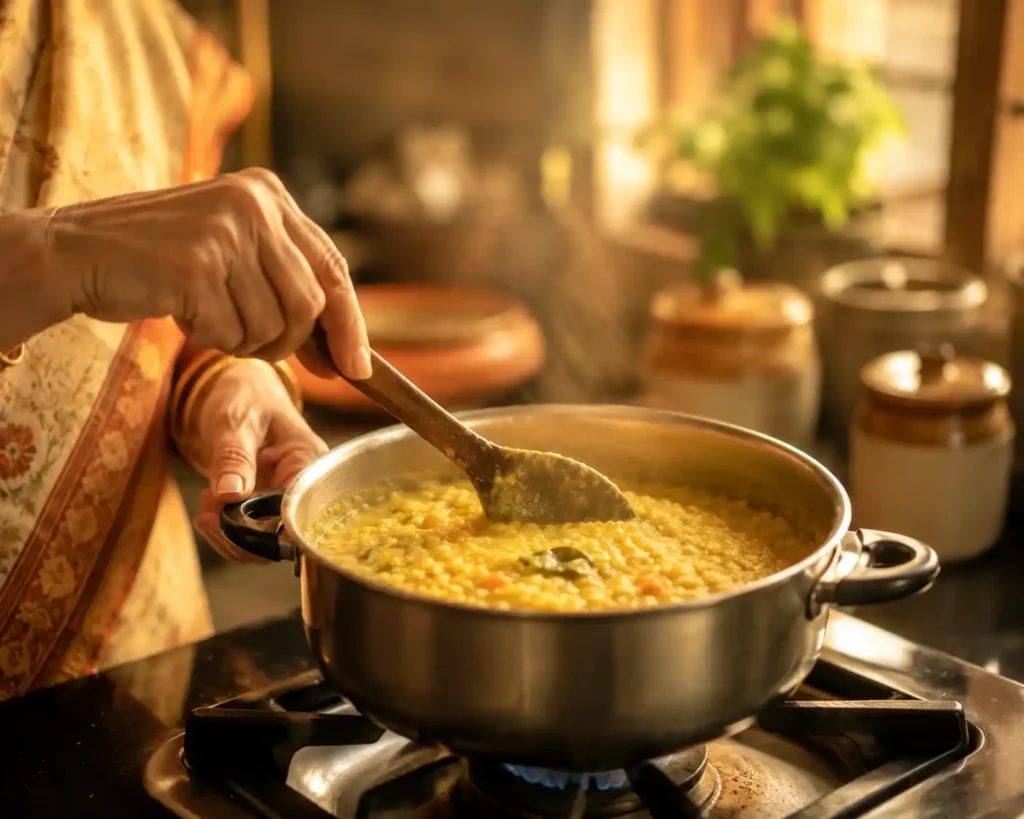
Start thin, adjust the texture as your baby grows, and don’t be afraid to lean on the same basic pot your own family has probably been making for generations. Some things really don’t need reinventing.
This article is for general informational purposes only and does not replace advice from your child’s pediatrician or a registered dietitian. If you have any concerns about your baby’s nutrition, growth, or feeding, please speak to a qualified healthcare professional.
Sources: American Academy of Pediatrics | World Health Organization