
50+ Finger Foods for 1 Year Old: Safe, Easy & Nutritious Ideas
🟢 Quick Facts
•By Tiny Tummies Food
•Updated July 2026
• 10 min read
|
Age |
12–24 months |
|---|---|
|
Meal |
finger foods |
|
Prep Time |
2–20 minutes |
|
Best Foods |
Banana oat pancake strips, Soft cheese cubes, Steamed sweet potato fingers, Banana pieces, Mini egg muffins |
|
Difficulty |
Easy |
|
Best For |
Self-feeding, BLW, daycare, on-the-go |
There is a moment — usually somewhere around 11 or 12 months — when a toddler decides that the spoon coming toward their mouth is the enemy and the only acceptable way to eat is with their own hands. My daughter hit this phase at exactly 12 months and made her position very clear by grabbing the spoon, throwing it across the kitchen, and then looking at me with an expression that said: I will be handling this myself now, thank you.
It is frustrating in the moment. Food goes everywhere. Mealtimes take longer. You will find peas in places that defy the laws of physics.
But this drive to self-feed is genuinely important. It gives toddlers a chance to practice hand-eye coordination, develop their pincer grasp, explore different textures, and become more comfortable feeding themselves. Leaning into it — with the right finger foods for 1 year old — makes the whole phase significantly easier.
This guide covers 50+ finger food ideas that are safe, genuinely nutritious, and realistic for actual busy families.
Why Finger Foods Matter at Age One
The shift to finger foods for babies at around 8 to 12 months is not just about convenience — it is genuinely important for development in several specific ways.
The pincer grasp — picking up small objects between thumb and forefinger — develops and strengthens through the repeated practice of picking up small pieces of food. This same fine motor skill is later needed for holding a pencil, doing up buttons, and a hundred other tasks. Finger food time is actually fine motor practice in disguise.
Self-feeding also gives toddlers control over their own eating — how fast, how much, which piece next. This sense of agency makes them significantly more willing to engage with the food in front of them.
And the sensory exploration — squishing, smearing, examining food before eating it — is how toddlers build familiarity and trust with new foods. The child who mushed broccoli between their fingers for three weeks before eating it is actually making progress, even if it does not feel like it.
Choking Hazards to Know
Before anything else — choking safety. This is not optional information and it is worth knowing properly.
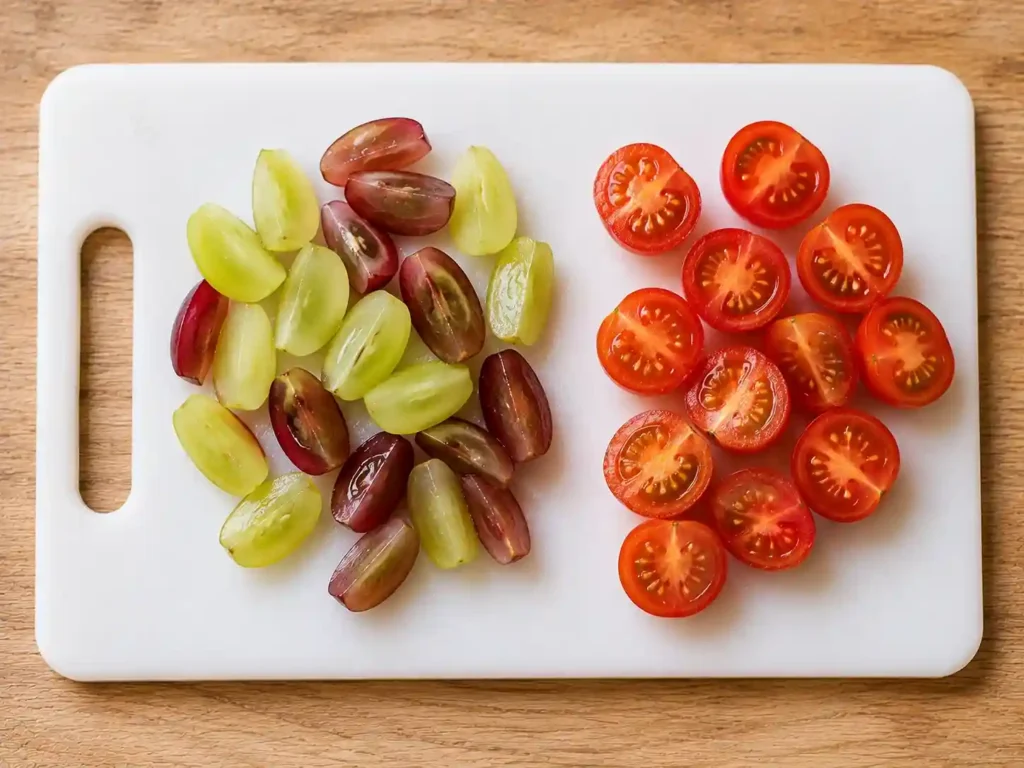
The shape that matters most is round. Round objects — whole grapes, whole cherry tomatoes, whole blueberries for very young toddlers, round slices of banana, round slices of hot dog — can lodge in the airway. Always cut round foods into quarters lengthwise, not in round slices.
Soft does not always mean safe. Soft foods that are also sticky — large globs of nut butter, for example — can be as dangerous as hard foods. Always spread nut butters thinly.
The squeeze test. If you cannot squish a food easily between your thumb and forefinger, it is too hard for a one year old. Raw carrot, whole nuts, hard apple, popcorn — all too hard.
Always supervise. Sit with your toddler at every meal and snack. Choking can happen quickly and quietly. This is not about hovering anxiously — it is a genuine safety requirement at this age.
Know the difference between gagging and choking. Gagging — which involves noise, coughing, and a red face — is normal and part of how toddlers learn to manage food in their mouth. Choking is silent and requires immediate action. Most parents find it helpful to learn basic infant first aid before introducing finger foods.
What Makes a Good Finger Food?
Good toddler finger foods share a few specific characteristics:
Soft enough to squish: The squeeze test again — if it squishes easily between your fingers, a toddler with few or no teeth can manage it safely.
Right size: Choose a size and shape your child can pick up and manage comfortably. Foods should be soft enough to mash easily between your fingers and prepared in a shape that suits your child’s developmental skills.
Manageable texture: Soft, slightly yielding, not crumbly or sticky. Crumbly foods are frustrating for toddlers who are still developing their grip. Very sticky foods are a safety concern.
Nutritionally worthwhile: Finger food ideas that cover protein, healthy fat, complex carbs, and produce are the goal — not just crackers and rice cakes, which are easy but nutritionally thin.
Breakfast Finger Foods
These are the finger food ideas that work at breakfast — soft enough to eat first thing in the morning, nutritious enough to fuel the morning’s activity, and manageable for small hands.
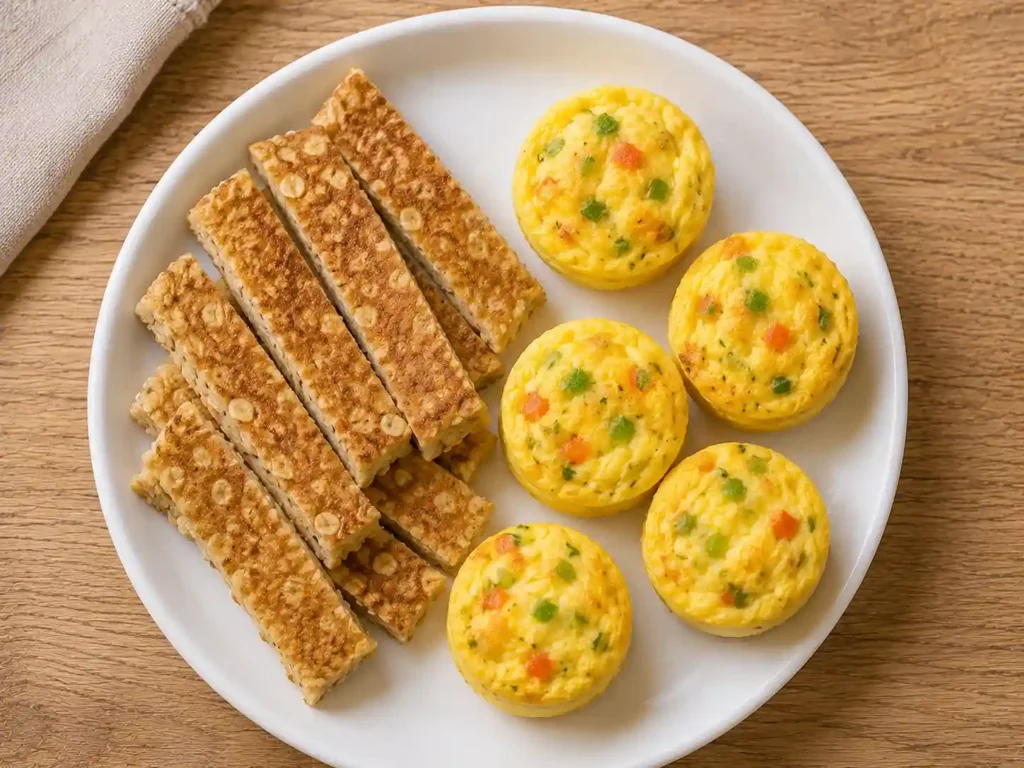
1. Banana Oat Pancake Strips
The 3-ingredient banana oat pancake cut into strips is probably the most popular toddler finger food breakfast in existence. Mash one ripe banana, mix with one egg and two tablespoons of oat flour, cook small pancakes in a little butter. Cut into strips when cool enough to handle. Protein from the egg, complex carbs from the oats, natural sweetness from the banana. Freeze a batch and reheat from frozen — one of the most practical finger food recipes for babies that also works all the way through the toddler years.
2. Soft French Toast Fingers
Dip whole wheat bread in whisked egg and milk, cook in a little butter until soft and golden. Cut into strips before serving. Egg provides protein and healthy fat, bread provides complex carbs. A weekend breakfast that feels special without requiring much effort.
3. Mini Egg Muffin
Batch-baked egg muffins with finely chopped soft vegetables — the kind that can be held whole and eaten like a cupcake. High in protein and iron. Make a full tray on Sunday, refrigerate for four days, reheat in thirty seconds. One of the most useful baby finger food ideas for busy mornings.
4. Soft Boiled Egg Quarters
A soft boiled egg peeled and cut into quarters. Easy to hold, high in protein and healthy fat, and genuinely one of the best best finger foods for infants transitioning to table food.
5. Avocado Toast Strips
Mashed avocado on soft whole grain toast, cut into strips. Healthy fat from the avocado, complex carbs from the bread. Two minutes to prepare and something most toddlers accept readily.
6. Omelette Fingers
A flat omelette made with two eggs and a little grated cheese, cooked until just set, slid onto a board and cut into strips when cool. Protein, healthy fat, and calcium in a format toddlers can hold and eat independently.
7. Banana Muffin
A mini banana oat muffin held whole — one of the easiest baby first finger foods because toddlers can hold the whole muffin and eat at their own pace. Make batches and freeze.
Lunch Finger Foods
Finger foods for toddlers at lunch need to be filling enough to carry them through the afternoon. These combine protein, carbs, and vegetables in formats toddlers can manage independently.
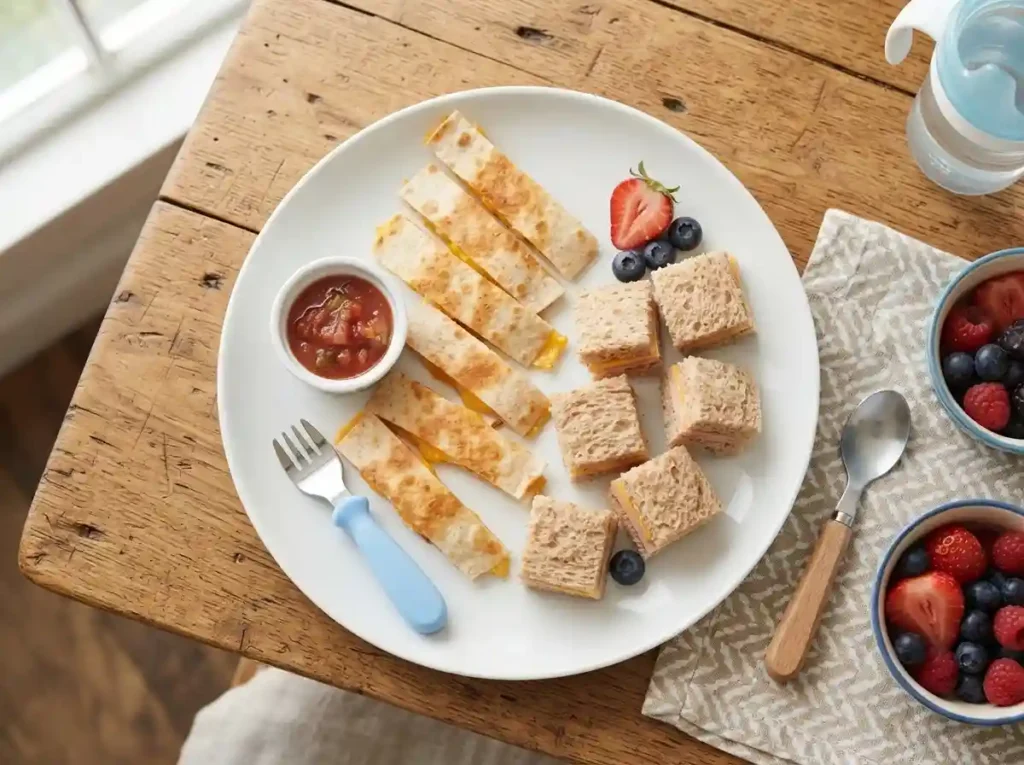
8. Mini Sandwich Squares
Soft whole wheat bread with cream cheese, hummus, or egg salad filling. Cut into small squares — about two centimeters each. Soft enough to eat easily, nutritious depending on the filling, and one of the most universally accepted finger foods for 1 year old at lunch.
9. Cheese Quesadilla Strips
Mild cheese melted inside a small whole wheat tortilla, folded and cut into strips. Protein and calcium from the cheese, complex carbs from the tortilla. Four minutes to make and something most toddlers love immediately.
10. Avocado and Cheese Wrap Rounds
Mashed avocado and grated cheese in a small tortilla, rolled up and cut into rounds. The round cross-section shape is popular with toddlers and the combination of healthy fat and protein makes it genuinely filling.
11. Mini Pasta Shapes
Small pasta shapes like orzo or stelline cooked until very soft. Toddlers can pick up individual pieces with their pincer grasp. Toss with a little olive oil or mild cheese sauce. A good toddler finger food for practicing fine motor skills.
12. Rice Balls
Soft cooked rice shaped into small balls with a little olive oil to help them hold together. Toddlers find the shape easy to pick up and the compact format means less mess than loose rice. Tuck a small piece of soft cooked vegetable inside for extra nutrition.
13. Frittata Squares
Baked egg frittata with vegetables and cheese, cut into small squares. Make a large tray, refrigerate for four days. Protein, iron, and vegetables in a format toddlers can eat independently at home or at daycare.
14. Mini Chicken Meatballs
Very small chicken meatballs with hidden grated zucchini, baked until cooked through. Easy to pick up, high in protein, and the zucchini adds vegetables without any fuss. Freeze a large batch — one of the most practical finger food recipes for babies 9-12 months and beyond.
Dinner Finger Foods
Dinner finger foods for babies and toddlers need to account for the tired-evening reality — familiar, soft, and quick to get on the table.
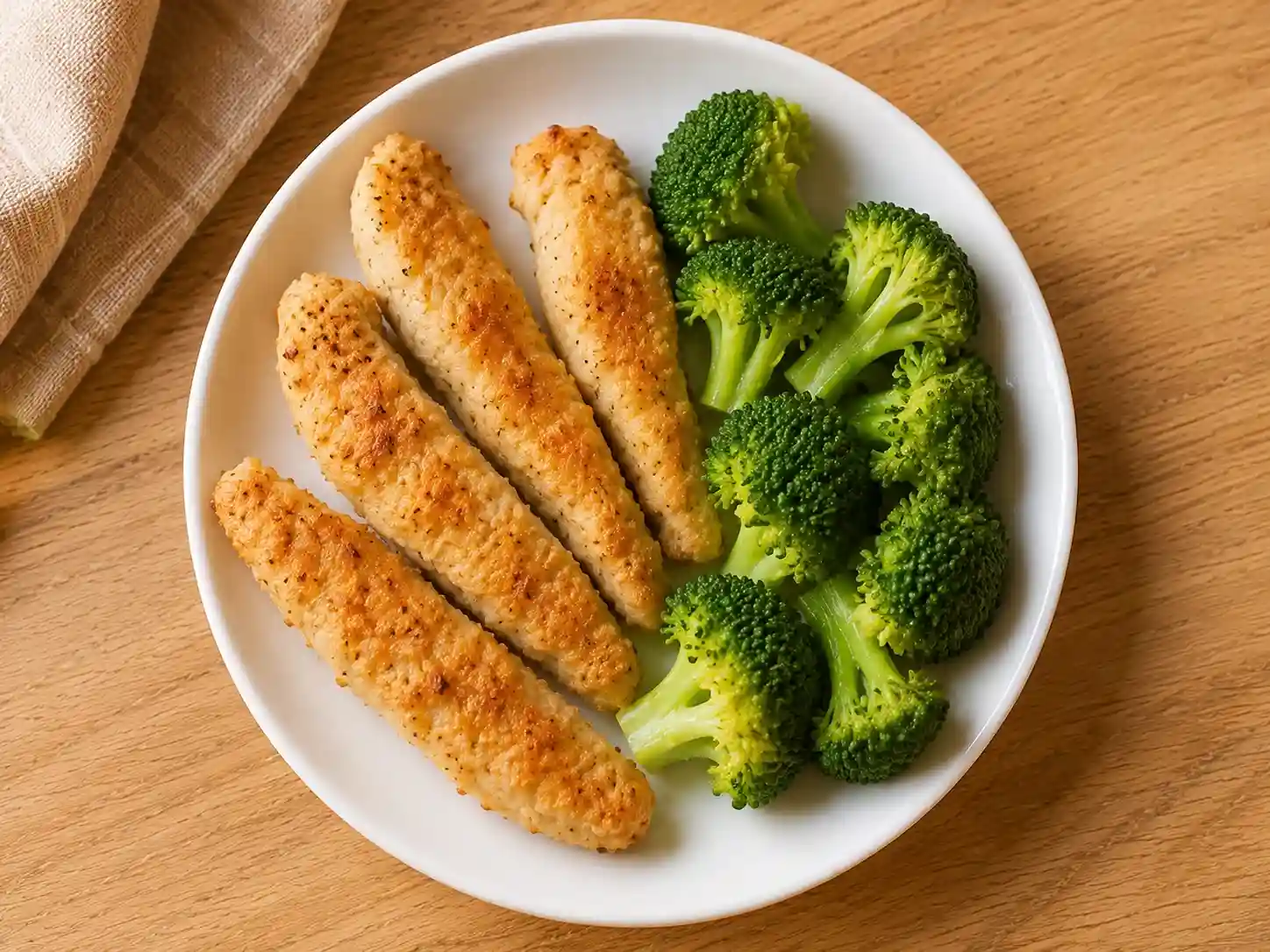
15. Baked Chicken Strips
Thin chicken strips coated in egg and fine breadcrumbs, baked at 180°C for 15 minutes. A homemade alternative to processed nuggets that the whole family can eat. Cut into small pieces for younger toddlers. High protein, much lower in salt than any packaged version.
16. Sweet Potato Fritters
Mashed sweet potato mixed with egg and a little oat flour, cooked in small fritter shapes in a little oil. Rich in vitamin A, naturally sweet, and easy for small hands to hold. Refrigerate for three days.
17. Mini Turkey Meatballs
Ground turkey with grated zucchini and a tiny pinch of cumin, formed into very small balls and baked. Protein from the turkey, hidden vegetables from the zucchini. Serve with soft pasta or rice for a complete dinner.
18. Soft Fish Fingers — Homemade
White fish coated in fine breadcrumbs and baked until just cooked through. Cut into small pieces before serving. Omega-3 for brain development, much lower in salt than shop-bought versions. Serve with mashed potato and soft steamed peas.
19. Paneer Cubes
Soft paneer cut into small cubes, lightly warmed in a little butter or olive oil with a tiny pinch of turmeric. Protein and calcium from the paneer, and a gentle introduction to South Asian flavors for toddlers who grow up eating them. One of the best finger foods for toddlers from an Indian food tradition that most Western toddler food guides completely ignore.
20. Egg and Vegetable Frittata Squares
Same as the lunch version — baked egg frittata cut into small squares. Works equally well at dinner and makes it easy to offer eggs in a different format from breakfast.
Snack Finger Foods
Finger foods for babies at snack time need to be quick, portable, and not too filling — the goal is bridging the gap to the next meal, not replacing it.
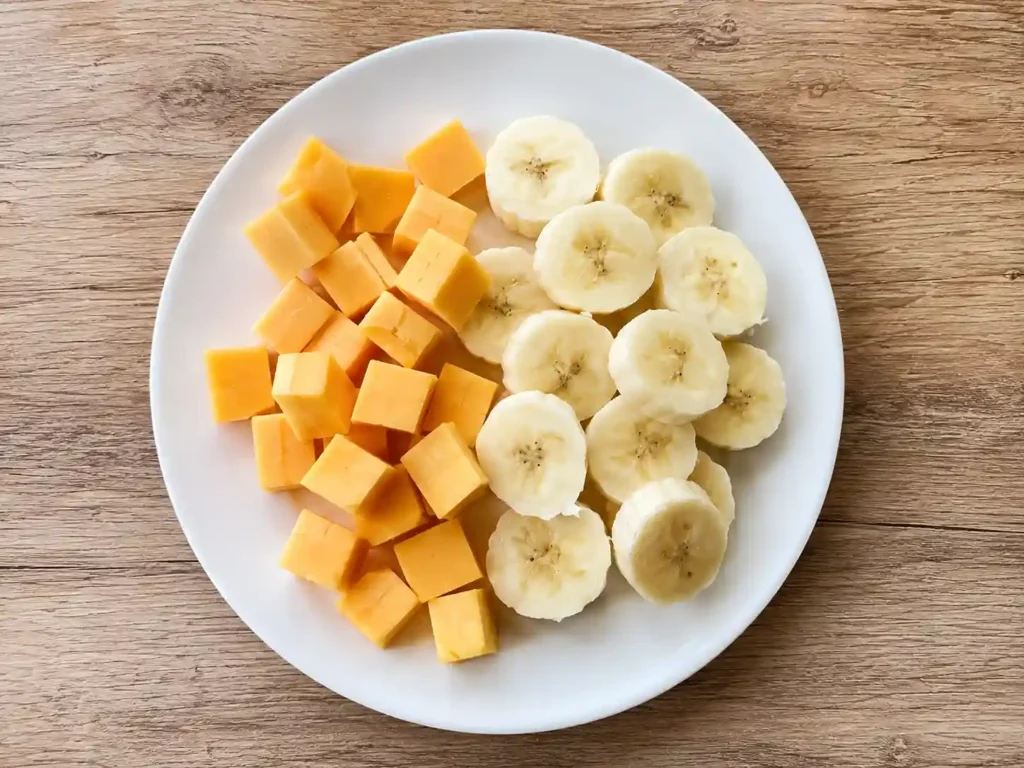
21. Soft Cheese Cubes
The simplest and most reliable toddler snack finger food. Cut mild cheddar or mozzarella into small cubes. Zero preparation. High in calcium and protein. Most toddlers find cheese very easy to pick up and accept readily.
22. Banana Pieces
Ripe banana broken or cut into small pieces. Soft, naturally sweet, nutritious, portable. The most universally accepted baby finger food idea in existence. Keep one in your bag at all times.
23. Blueberries
For young toddlers, mash or cut blueberries before serving to make them easier to manage. They are naturally sweet and provide useful nutrients, making them an easy addition to breakfast or snack time.
24. Sweet Potato Fingers
Pre-baked sweet potato strips kept in the fridge and served at room temperature. Naturally sweet, rich in vitamin A, and easy for small hands to hold.
25. Mini Banana Muffin
A mini muffin from a batch in the freezer, defrosted at room temperature. The whole muffin format is one of the most satisfying baby first finger foods because toddlers can hold the whole thing and eat at their own pace.
Fruit Finger Foods
Fruit is naturally well-suited to finger food format — soft, sweet, and something most toddlers accept readily. The key is making sure everything is ripe enough to be genuinely soft, and cut to eliminate round choking hazards.
26. Ripe Pear Pieces
Very ripe pear peeled and cut into small pieces. Gentle on little stomachs, naturally sweet, and easy to eat. One of the softest fruits available which makes it ideal for younger toddlers or those with fewer teeth.
27. Mango Cubes
Very ripe mango cut into small cubes. Rich in vitamin A and vitamin C, naturally soft, and most toddlers find the sweet tropical flavor very appealing.
28. Watermelon Cubes
Seedless watermelon cut into small cubes. Hydrating, naturally sweet, bright red color that attracts toddler attention. Good on warm days.
29. Ripe Peach Pieces
Very ripe peach with skin removed, cut into small pieces. Rich in vitamin C, soft when properly ripe, and popular with most toddlers.
30. Papaya Cubes
Very ripe papaya cut into small cubes. Rich in vitamin C and digestive enzymes, extremely soft, and one of the easiest fruits for very young toddlers to manage independently.
31. Soft Cooked Apple Pieces
Apple peeled and cooked until very soft — either steamed or briefly microwaved with a little water. Raw apple is too hard and a choking hazard, but cooked apple is soft, naturally sweet, and easy to eat.
32. Strawberry Pieces
Ripe strawberries with the tops removed and cut into small pieces. High in vitamin C, soft when properly ripe, and popular with most toddlers. The bright red color is a draw.
Vegetable Finger Foods
Vegetables in finger food format are genuinely more accepted by most toddlers than the same vegetables served in any other way. The combination of self-feeding agency and dipping options makes a significant difference.
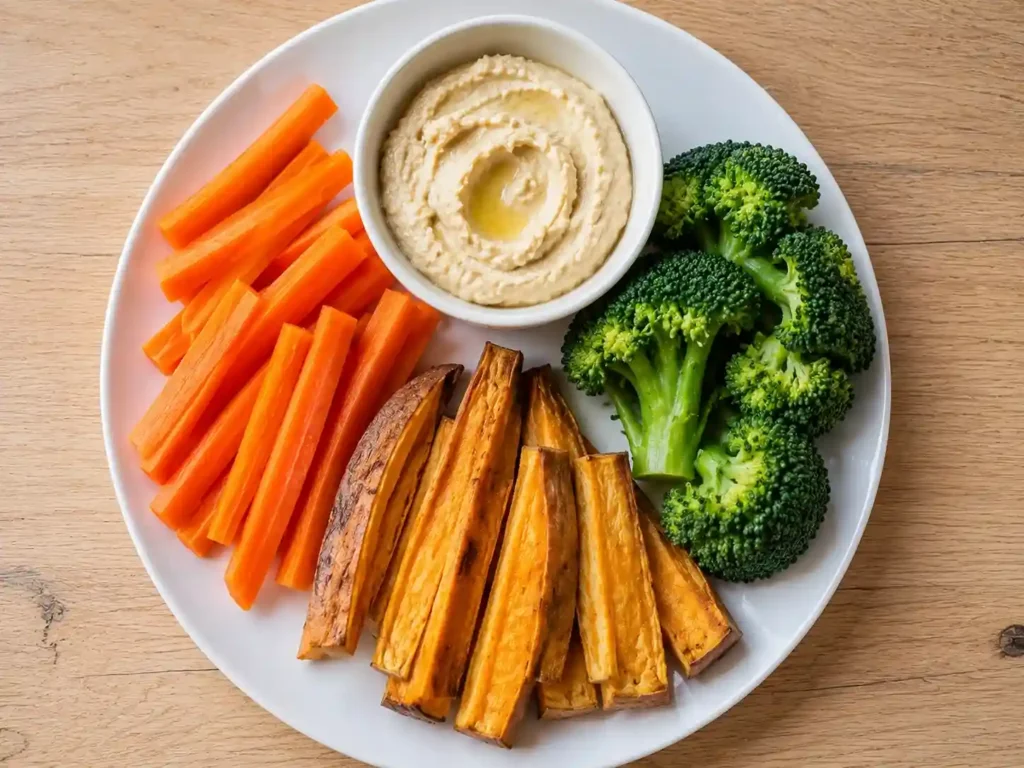
33. Steamed Carrot Sticks
Steam carrot sticks until completely soft — the squeeze test applies. Naturally sweet, rich in beta-carotene, and a classic finger food for babies. Serve with hummus for dipping.
34. Soft Sweet Potato Strips
Bake or steam sweet potato cut into strips until very soft. Rich in vitamin A, naturally sweet, and easy for small hands to hold. Make a batch and refrigerate for three days.
35. Steamed Broccoli Florets
Steam broccoli until completely soft. The small tree shape is popular with many toddlers. A good source of iron and vitamin C. Serve with mild cheese sauce or hummus if plain broccoli is refused.
36. Steamed Peas
Warm soft cooked peas. Perfect pincer grasp practice — toddlers love picking them up one by one. Good plant-based protein and fiber in a tiny package. One of the best first finger foods for infants transitioning to table food.
37. Soft Cooked Green Beans
Steam green beans until very soft. Cut into small pieces. A good vegetable finger food for toddlers who have worked through the more common options.
38. Soft Cooked Zucchini
Zucchini steamed or roasted until very soft, cut into small pieces or strips. Mild flavor that most toddlers accept without resistance.
39. Avocado Slices
Ripe avocado cut into small slices or pieces. Healthy fat for brain development, naturally soft, and easy to eat. Can be slightly slippery — some toddlers find it easier to eat if it is very slightly mashed.
40. Soft Baked Butternut Squash
Butternut squash roasted until very soft and cut into small cubes. Naturally sweet, rich in vitamin A, and a good vegetable finger food for toddlers who like sweeter flavors.
Protein Finger Foods
Protein in finger food format is what gives meals and snacks real staying power. These finger food ideas cover protein from eggs, meat, fish, legumes, and dairy.
41. Soft Boiled Egg Quarters
Peeled and quartered — easy to hold, high in protein, choline, and healthy fat. One of the most complete baby finger food ideas nutritionally.
42. Small Cheese Cubes
Already mentioned multiple times — for good reason. The single most practical protein finger food for toddlers at any meal or snack.
43. Shredded Chicken Pieces
Very finely shredded cooked chicken in small pieces. Plain, mild, easy to eat. Keep batch-cooked shredded chicken in the freezer for quick protein additions to any meal.
44. Soft Paneer Cubes
Small cubes of soft paneer lightly warmed in butter. Protein and calcium. A particularly good finger food for toddlers in South Asian households where paneer is already a familiar ingredient.
45. Soft Falafel
Small falafel patties made from blended chickpeas with a little cumin, baked until cooked through. Plant-based protein and iron in a format toddlers can hold. Serve with hummus.
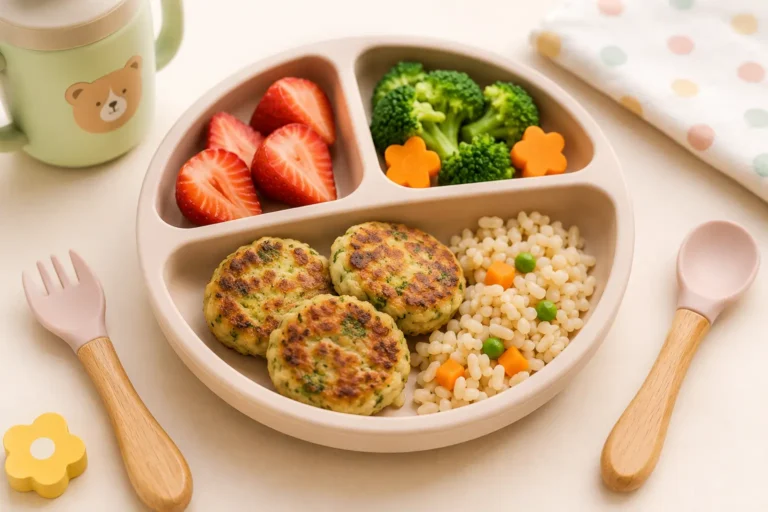
46. Lentil Patties
Small flat patties made from mashed red lentils with a little cumin, baked or pan-cooked. Rich in iron and plant protein. Make a batch and refrigerate.
47. Mini Salmon Potato Patties
Mix cooked, flaked salmon with mashed potato and a little finely chopped cooked vegetable. Shape into small soft patties and cook until heated through. Let them cool and always check carefully for any bones before serving
Homemade Finger Food Recipes
These homemade toddler finger food recipes are worth the batch cooking investment. All freeze well and reheat quickly.
48. 3-Ingredient Banana Oat Pancakes
One mashed banana, one egg, two tablespoons oat flour. Cook small pancakes, cool, cut into strips. Freeze between baking paper sheets. Reheat from frozen in a dry pan. The single most useful finger food recipe for the entire toddler period.
49. Mini Savoury Egg Muffins
Whisked eggs with finely chopped spinach, grated carrot, and grated cheese, baked in a mini muffin tin at 180°C for 12 minutes. Refrigerate for four days or freeze. Protein, iron, and vegetables in a format toddlers love.
50. Sweet Potato and Lentil Patties
Mashed sweet potato and cooked red lentils mixed together, formed into small flat patties, and baked or pan-cooked. Rich in iron, beta-carotene, and plant protein. Refrigerate for three days.
51. Banana Oat Muffins
Three mashed bananas, two eggs, one cup oat flour, a little melted butter. Bake in a mini muffin tin at 175°C for 15 minutes. Freeze individually. Defrost as needed. The most made recipe in our family and genuinely useful as a finger food at any time of day.
52. Zucchini and Cheese Fritters
Finely grated zucchini squeezed of moisture, mixed with egg, a little oat flour, and grated mild cheese. Cook small fritters in a little oil. Refrigerate for three days. A good baby led weaning finger food that hides vegetables in something toddlers accept readily.
Baby Led Weaning Finger Foods
BLW finger foods — baby led weaning — means offering appropriately sized soft foods from the start and letting babies and toddlers self-feed from the beginning rather than progressing from purées. Whether or not you followed a strict BLW approach, the blw finger foods principles are useful for any toddler who is working on self-feeding.
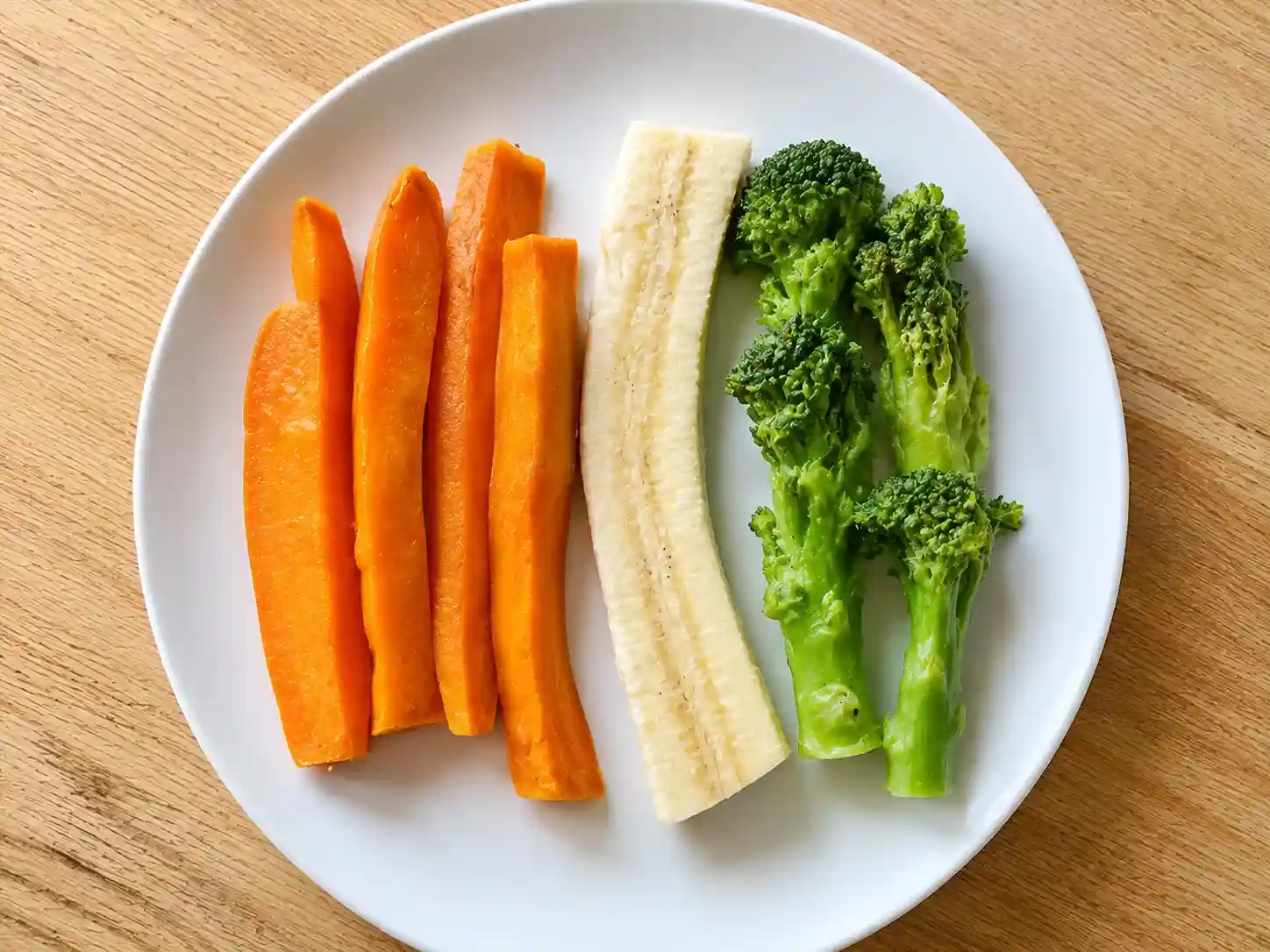
The key BLW principles for finger foods at age one:
Strip format for younger toddlers: Long strips that extend beyond the fist are easier to hold than small cubes for toddlers who have not yet developed a strong pincer grasp. Banana split lengthwise, soft cooked sweet potato in strips, omelette cut into fingers.
Spear format: Soft vegetables and fruits cut into spear shapes — long enough to hold, soft enough to eat safely.
Appropriate size: About the size of an adult finger for strips, about pea-sized for small pieces. Not so small that there is nothing to grab.
Good baby led weaning dinner ideas that double as one year old finger foods include soft shredded chicken with rice, pasta with vegetable sauce, soft fish with mashed potato, dal with soft roti strips, and mini meatballs. The key in all cases is soft texture and appropriate sizing.
Daycare Finger Food Ideas
Daycare finger foods should be easy for toddlers to handle and packed according to your daycare’s food-safety and storage rules. Foods that need refrigeration should be kept cold with an insulated lunch bag and ice pack.
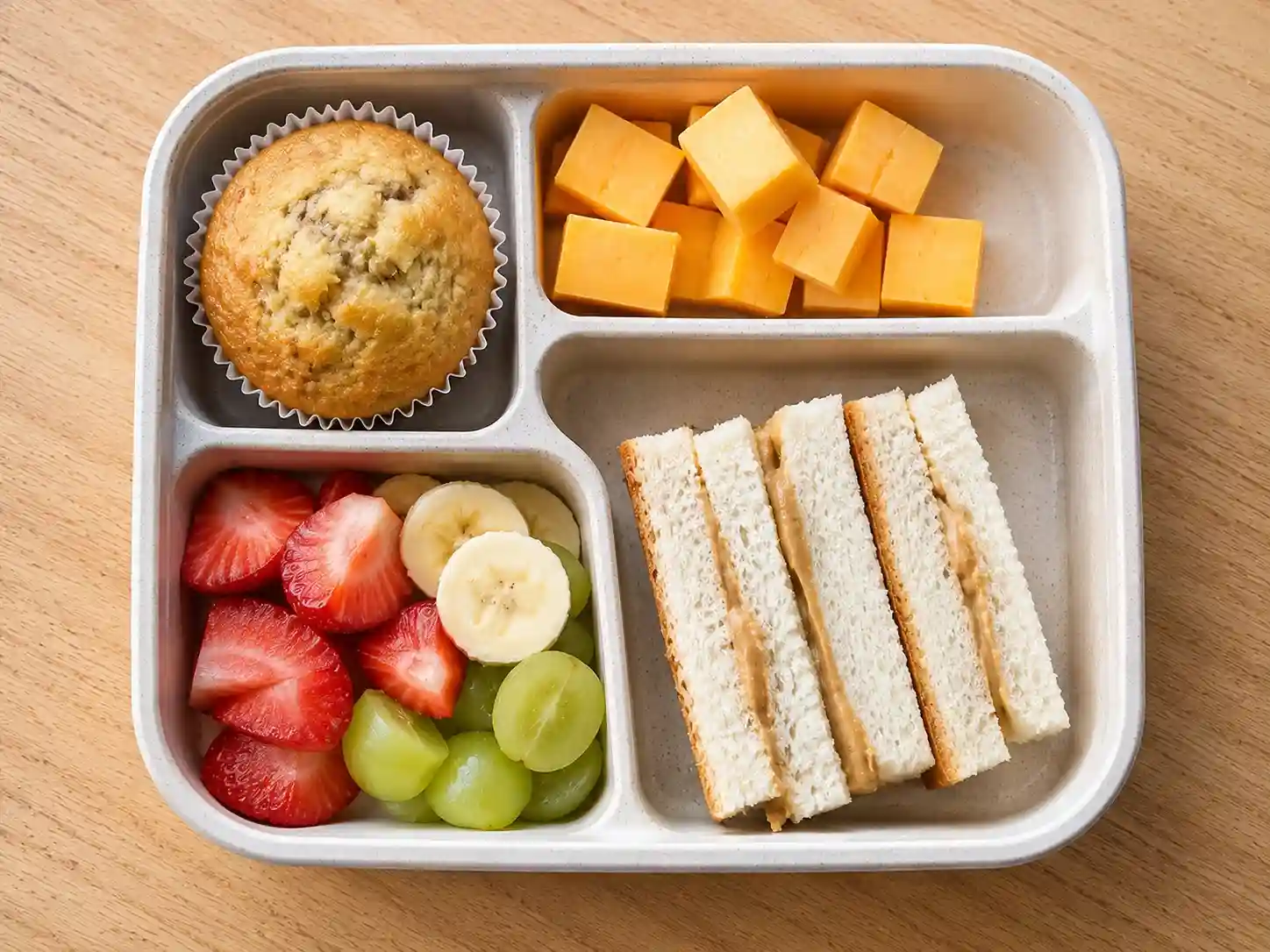
Best daycare finger foods:
- Mini banana muffins — travel well, fine at room temperature, easy to eat independently.
- Frittata squares — can be eaten at room temperature, high protein, refrigerate well.
- Soft cheese cubes — easy to portion and pack cold in an insulated lunch bag with an ice pack.
- Mini sandwich squares — soft fillings, easy to eat independently.
- Soft fruit pieces in a sealed container — easy to pack and serve, with storage handled according to your daycare’s food-safety guidelines.
- Rice balls — compact, easy to pick up, travel well.
- Sweet potato fritters — fine at room temperature, easy to hold.
Always check your daycare’s allergen policy before sending anything containing nuts, eggs, or other common allergens.
Finger Foods by Age
Finger Foods for 9-12 Month Old
At this age the pincer grasp is still developing. Longer strips that extend past the fist are easier to hold than small pieces. Good options: banana strips, soft cooked sweet potato strips, omelette fingers, soft steamed broccoli florets, avocado strips, soft cooked carrot sticks.
Finger Foods for 1 Year Old
By 12 months the pincer grasp is strengthening. Smaller pieces become more manageable. Good finger foods for 1 year old: all of the above plus small pasta shapes, soft cheese cubes, blueberries, mini pancake pieces, small meatballs, peas.
Finger Foods for 2 Year Olds
By two, toddlers can handle slightly more texture. Finger foods for 2 year olds can include slightly firmer options — well-cooked pasta that is not completely soft, slightly firmer fruit, and a wider range of vegetable options.
Frequently Asked Questions
One Last Thing
The finger food phase is messy. There is no way around that. Food will be in hair, on walls, under the highchair, and in places you will not discover for several days. That is not a sign anything is going wrong — it is a sign your toddler is actively engaging with their food, exploring textures, and practicing the fine motor skills that will serve them for years.
Keep soft cheese in the fridge, keep ripe bananas on the counter, keep a batch of banana oat pancake strips in the freezer, and have a good floor mat under the highchair. The mess is temporary. The self-feeding skills being built are not.
This article is for general informational purposes only and does not replace advice from your child’s pediatrician or a registered dietitian. If you have any concerns about your toddler’s nutrition, growth, or feeding, please speak to a qualified healthcare professional.
Sources: American Academy of Pediatrics | World Health Organization | Centers for Disease Control and Prevention