
1 Year Old Meal Plan: A Healthy 7-Day Guide for Growing Toddlers
🟢 Quick Facts
•Reviewed by Tiny Tummies Food Editorial Team
•Updated July 2026
• 8 min read
👶 Age Group
📅 Duration
🍽 Meals Included
⏱ Daily Prep Time
🥗 Difficulty
⭐ Best For
12–24 Months
7 Days
Breakfast, Lunch,
Dinner & 2 Snacks
15–20 Minutes
Easy
Healthy Growth &
Balanced Nutrition
Let me be completely honest with you. When my daughter turned one, I genuinely thought the hard part of feeding was behind us. No more purées. No more worrying about the right texture. No more tiny spoons waiting for a mouth to open.
Then she threw an entire bowl of rice on the floor and looked me dead in the eyes while doing it.
If you are currently in that season — the “what on earth do I feed this small human” season — you are in the right place. This is not going to be one of those articles that buries you in nutrition charts and calorie counts.
Get a practical, flexible one-year-old meal plan. It covers breakfast, lunch, dinner, and snacks for a week. This plan is based on easy toddler food ideas that real families can manage, even on a tough Tuesday morning.
In this guide, you’ll find: A complete 7-day meal plan, Healthy breakfast, lunch, dinner, and snack ideas, Foods to include every week, Foods to avoid, Grocery shopping tips, Meal preparation advice for busy parents, Answers to common questions about feeding a one-year-old
This guide helps you create healthy eating habits. It offers simple, family-friendly meals for all kids, whether they love food or are a bit picky.
What Is a 1 Year Old Meal Plan?
A 1-year-old meal plan is a weekly guide. It offers balanced meals and healthy snacks for toddlers aged 12 to 24 months. A meal plan lets parents provide different foods each day. This way, kids get a variety of nutrients from various food groups. This helps toddlers grow well and encourages them to try new tastes and textures.
A balanced toddler meal plan usually includes:
- Fruits
- Vegetables
- Whole grains
- Lean protein
- Dairy foods
- Healthy fats
- Plenty of water
Toddlers are now learning to feed themselves. They are also becoming more independent at mealtimes. Regularly offering a variety of healthy foods boosts confidence and lowers picky eating over time.
Why Is Meal Planning Important for Toddlers?
Planning meals ahead offers several benefits for both children and parents.
Supports Healthy Growth
Young children grow quickly during their second year of life. Nutritious meals give essential vitamins, minerals, protein, and healthy fats. These nutrients support strong bones, muscles, and brain growth.
Encourages Better Eating Habits
Toddlers often need to see a food several times before they are willing to try it. A weekly meal plan encourages variety without pressure.
Makes Life Easier
Knowing what you’ll serve each day saves time during busy mornings and evenings. It also makes grocery shopping more organized.
Reduces Food Waste
Buying ingredients with a weekly plan helps you use what you buy. This way, you waste less food.
Creates Family Mealtime Routines
Children feel more comfortable when meals happen at regular times. A consistent routine also helps improve appetite and behavior during meals.
What Changes at 12 Months?
The first birthday is a genuine turning point with food — not just another milestone photo. At this age, your toddler’s digestive system can handle most family foods.
They are working on their pincer grasp. This means they really want to pick things up and feed themselves. Letting them explore food, even if it’s messy, is key for their long-term relationship with it.
The other big change is that whole cow’s milk can now replace formula as the main drink. The World Health Organization suggests breastfeeding with solid foods until age 2 or beyond, if it suits your family. So, you don’t need to rush to stop if it’s still working well.
What does not change is the need for variety. When deciding what to feed a 1-year-old, aim for a mix of all main food groups. Make it more interesting and textured than purée.
💡Tip: Introduce one new food at a time. It may take several tries before a toddler accepts a new flavor.
What Does a 1 Year Old Actually Need?
At one year old, your child needs a balanced mix of nutrients every day. You do not need to memorize a textbook for this. Here is the version I wish someone had handed me on my daughter’s first birthday.
Protein — Eggs became my absolute best friend during this phase. Quick, cheap, almost always accepted without argument. Soft chicken, lentils, dal, beans, fish, and full-fat yogurt are good protein sources. They are great for toddler meals. Rotate them during the week. This way, you won’t cook eggs every morning. Though, some weeks, that’s just how it goes.
Healthy fats — This one catches a lot of parents off guard. Healthy fats are crucial at age one, more than at any other time. The brain is still growing quickly and needs fat for this development. Avocado, full-fat dairy, olive oil, salmon, and nut butters on toast are all great choices. Do not be tempted to go low-fat at this age — it is not what growing toddlers need.
Iron — Iron is often overlooked in healthy toddler meals. Low iron can impact both energy levels and brain development. Lentils, chicken, lean beef, eggs, spinach, and iron-fortified cereals are your best options.
Tip: Combine iron-rich foods for toddlers with vitamin C sources. Good options are strawberries, tomatoes, or oranges. Vitamin C helps the body absorb iron much better.
Calcium — Whole milk, cheese, yogurt, and cottage cheese cover this for most toddlers. If your child is allergic to dairy, talk to your pediatrician. They can suggest alternatives. Calcium is important at this stage.
Whole grains — Oats, brown rice, whole wheat bread, soft roti, whole grain pasta. These give steady energy rather than a sugar spike and crash. Many of these are foods your family already enjoys. This makes it easier to include them in toddler meals.
Fruits and vegetables — Aim for different colors across the week. Orange comes from sweet potatoes and mangoes. Green comes from peas and broccoli. Red comes from tomatoes and strawberries. Each color brings different vitamins. You do not need to overthink it — just try not to serve the same two vegetables every single day.
Foods to Include in a Healthy Toddler Meal Plan
A balanced weekly meal plan should include foods from every major food group.
|
Food Group |
Healthy Choices |
|---|---|
|
Fruits |
Banana, apple, berries, pear, mango |
|
Vegetables |
Broccoli, peas, carrots, spinach, sweet potato |
|
Protein |
Chicken, eggs, beans, fish, tofu |
|
Dairy |
Whole milk, yogurt, cheese |
|
Whole Grains |
Oats, brown rice, whole wheat bread, pasta |
|
Healthy Fats |
Avocado, olive oil, nut butter |
Providing different foods helps toddlers receive essential nutrients and makes mealtimes fun.
Foods to Limit or Avoid
Some foods aren’t safe for one-year-olds. They can cause choking or lack nutrition. This list is shorter than many think, but it’s important:
Honey — Safe after 12 months. Avoid before the first birthday because of the risk of infant botulism.
Whole nuts — A choking hazard at this age. Nut butters spread thin on toast are fine for most toddlers, as long as there’s no allergy.
Added salt — Toddler kidneys are still developing and cannot handle adult-level salt intake. Skip salt during cooking and avoid heavily salted packaged foods.
Added sugar — Your toddler does not need it. Introducing it early can make kids prefer sweet foods. This preference can be hard to change later. The natural sweetness in fruit is genuinely enough.
Whole grapes and cherry tomatoes — Always cut into quarters lengthwise. The round shape is one of the most common and serious choking hazards for this age group. It takes about five seconds to cut them — do not skip this step.
Sugary drinks and juice — Water and whole milk are everything your toddler needs to drink. Juice adds significant sugar for almost no nutritional advantage over whole fruit.
Hard raw vegetables — Always cook carrots and broccoli until they’re soft. You should be able to squish them easily between your fingers. If you cannot squish it, your toddler probably cannot safely chew it either.
As the CDC notes, young children are at significantly higher risk for choking than older kids. Always supervise meals and snacks without exception.
It’s also best to avoid making separate meals for picky eaters. Continue offering healthy family foods in toddler-friendly portions. Choose soft, bite-sized foods that your toddler can easily manage.
How Much Should a 1 Year Old Eat?
Here’s a helpful tip that eased my mealtime anxiety: a toddler’s stomach is about the size of their closed fist. Look at your child’s fist right now. That is tiny. So when they appear to eat almost nothing, they may actually be completely fine.
A meal plan for a 1-year-old should include three small meals and two snacks each day. Space these out every two to three hours. A typical meal portion is about two to four tablespoons of each food. That’s much smaller than an adult-sized plate.
Toddler appetites also go through natural waves. A growth spurt week might mean your child eats everything you put in front of them. A teething week might mean they barely touch anything. Both are completely normal.
Feeding therapist Ellyn Satter puts it well: parents choose what food to offer, when to serve it, and where to eat. The child’s job is to decide whether to eat it and how much. Once I used that framework, mealtime became much less stressful for us both.
⚠️ Safety First: Always chop, mash, or steam foods until they are soft. This helps prevent choking. Avoid whole grapes, whole nuts, large globs of sticky peanut butter, and hard raw vegetables.
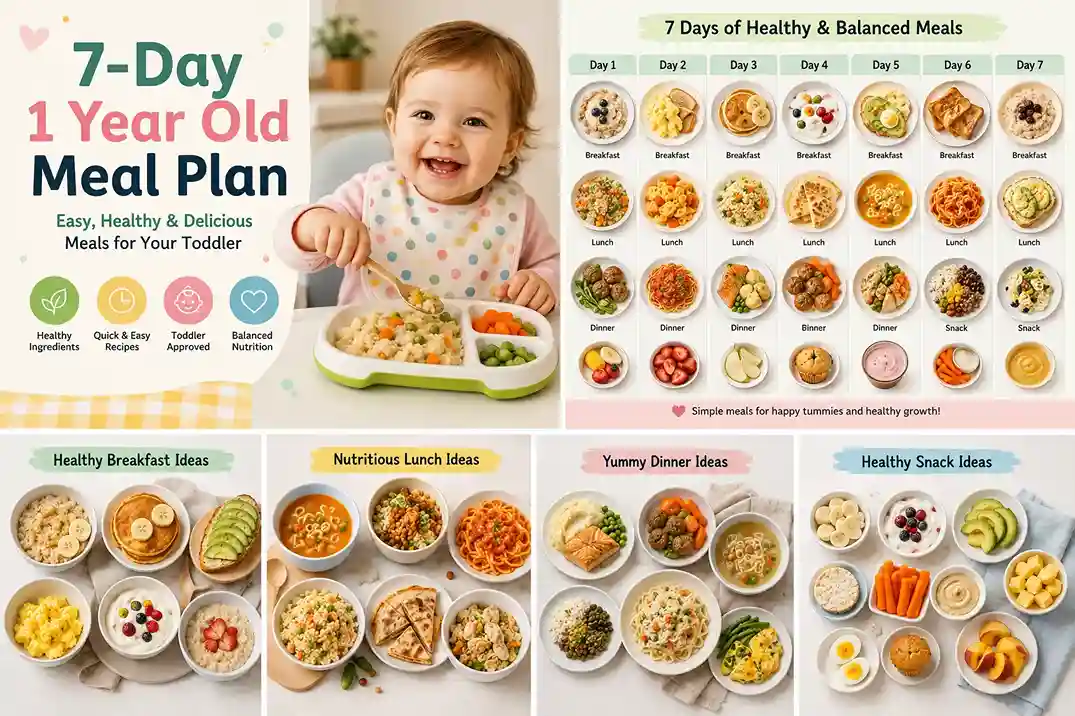
📅 The 7-Day 1 Year Old Toddler Meal Plan
Now that you know your toddler’s nutritional needs, it’s time to put that knowledge to work. This 7-day meal plan is for busy parents. It helps you serve healthy meals fast. No need to spend hours in the kitchen.
Remember that every toddler has a different appetite. Some days they may eat everything on the plate, while other days they may only take a few bites. That’s completely normal. Offer a mix of healthy foods. Don’t worry if your child doesn’t finish every meal.
Every meal is designed to be:
- Soft and easy to chew
- Rich in essential nutrients
- Quick to prepare
- Suitable for self-feeding
- Family-friendly whenever possible
Weekly 7-Day Meal Plan at a Glance
| Day | Breakfast | Morning Snack | Lunch | Afternoon Snack | Dinner |
|---|---|---|---|---|---|
| Monday | Banana oat porridge | Greek yogurt & raspberries | Chicken, rice & broccoli | Sweet potato wedges | Shredded chicken with avocado |
| Tuesday | Apple cinnamon oatmeal | Strawberries | Cottage cheese toast | Avocado slices | Whole-wheat pasta with tomato sauce |
| Wednesday | Banana oat pancakes | Cheddar cheese | Lentils & rice | Steamed pears | Baked salmon & mashed potatoes |
| Thursday | Greek yogurt with mango | Green peas | Cheese quesadilla | Banana muffin | Turkey meatballs & carrots |
| Friday | Mashed egg & toast | Peach slices | Vegetable soup | Yogurt smoothie | Chicken cutlet & broccoli |
| Saturday | French toast | Hummus & carrots | Vegetable pasta | Mozzarella | Brown rice with squash |
| Sunday | Quinoa porridge | Boiled egg | Avocado toast | Applesauce | Spinach & cheese omelet |
Day 1 (Monday)
🍳 Breakfast
Banana Oat Porridge: Cook rolled oats in whole milk until very soft—softer than usual. Mash in half a ripe banana and add a few blueberries on top. The banana makes it naturally sweet, no sugar needed. Takes about five minutes and is one of those easy toddler meals that works almost every single time.
Morning Snack:
Greek Yogurt with Raspberries: Stir mashed raspberries into plain full-fat Greek yogurt. The color changes to a lovely pink. This makes it much more interesting to a one-year-old. Good calcium and protein hit to carry them through to lunch.
Lunch:
Soft Rice with Chicken and Broccoli: Cook the rice until very soft. Shred cooked chicken breast and add it to the rice. Then, mix in finely chopped steamed broccoli. Drizzle a bit of olive oil or ghee on top. A great lunch idea for a 1-year-old is a bowl that includes protein, carbs, and veggies. It’s easy to prepare and nutritious.
Afternoon Snack:
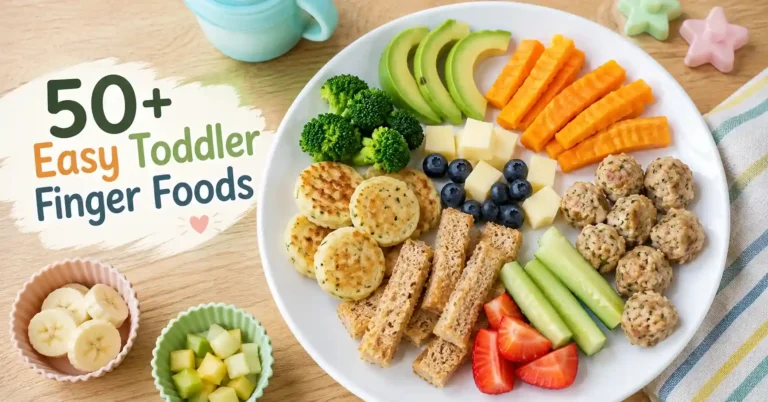
Baked Sweet Potato Wedges: Cut the sweet potato into strips. Bake them until they are very soft. Let them cool before serving. Great toddler finger foods are easy to hold and naturally sweet. They’re packed with vitamin A. Make a big batch! They stay fresh in the fridge for two days, so you can use them as snacks all week.
Dinner:
Shredded Chicken with Mashed Avocado: Tender shredded chicken alongside creamy mashed avocado and soft, cooked peas. Protein, healthy fat, and fiber—all in a simple meal. This is just the easy toddler dinner you need at 6 PM when energy is running low.
Day 2 (Tuesday)
🍎 Breakfast
Apple Cinnamon Oatmeal: Oats cooked in whole milk with a spoonful of unsweetened applesauce and a pinch of cinnamon. Warming, naturally sweet, and comes together in under ten minutes. On cold mornings this one genuinely feels comforting for everyone at the table.
Morning Snack:
Fresh Strawberry Slices: Ripe strawberries cut into small pieces. Cool and refreshing, it’s full of vitamin C. This vitamin helps your body absorb iron from other foods.
Lunch:
Cottage Cheese on Whole Wheat Toast: Spread cottage cheese thickly on soft whole wheat toast. Cut the toast into strips. A simple lunch idea for 1-year-olds on busy days. No cooking needed! Toddlers enjoy picking up the strips themselves.
Afternoon Snack:
Avocado Slices: Ripe avocado cut into small pieces or lightly mashed. A great nutrient-rich snack for a 1-year-old is one that has healthy fats, fiber, and folate. It’s something most toddlers can easily eat and enjoy.
Dinner:
Whole Wheat Pasta with Tomato Sauce: Cook the pasta until it’s very soft—much softer than al dente. Blend tomatoes with olive oil. Then, add a handful of red lentils for extra protein and iron. Enjoy your simple sauce! No salt, no sugar. A toddler friendly meal the whole family can eat together, which is always a practical win.
Day 3 (Wednesday)
🥞 Breakfast
Banana Oat Pancakes: Mash one ripe banana. Mix it with one egg and two tablespoons of oat flour. Cook in a bit of butter over low heat. No sugar, no salt, no fuss. These toddler food recipes are likely the most popular on our site. They work well, even on tough eating days.
Morning Snack:
Cheddar Cheese Cubes: Small cubes of mild cheddar. It takes just thirty seconds to prepare. It packs a good dose of calcium and protein. Plus, it’s a snack for one-year-olds that rarely gets turned down.
Lunch:
Lentils and Rice — Dal Chawal Cook moong dal until very soft with turmeric. Serve it over soft rice. Mash everything lightly, then add a tiny drizzle of ghee. One of the best meals for a 1-year-old is nutritious and cheap. It’s packed with iron, protein, and fiber. Plus, you can batch-cook it at the start of the week. My daughter ate this twice a week for most of her second year, and I have absolutely no regrets about that.
Afternoon Snack:
Steamed Pear Pieces: Steam pear slices until soft. Naturally sweet, gentle on little stomachs, and easy to chew even for toddlers who do not have many teeth yet.
Dinner:
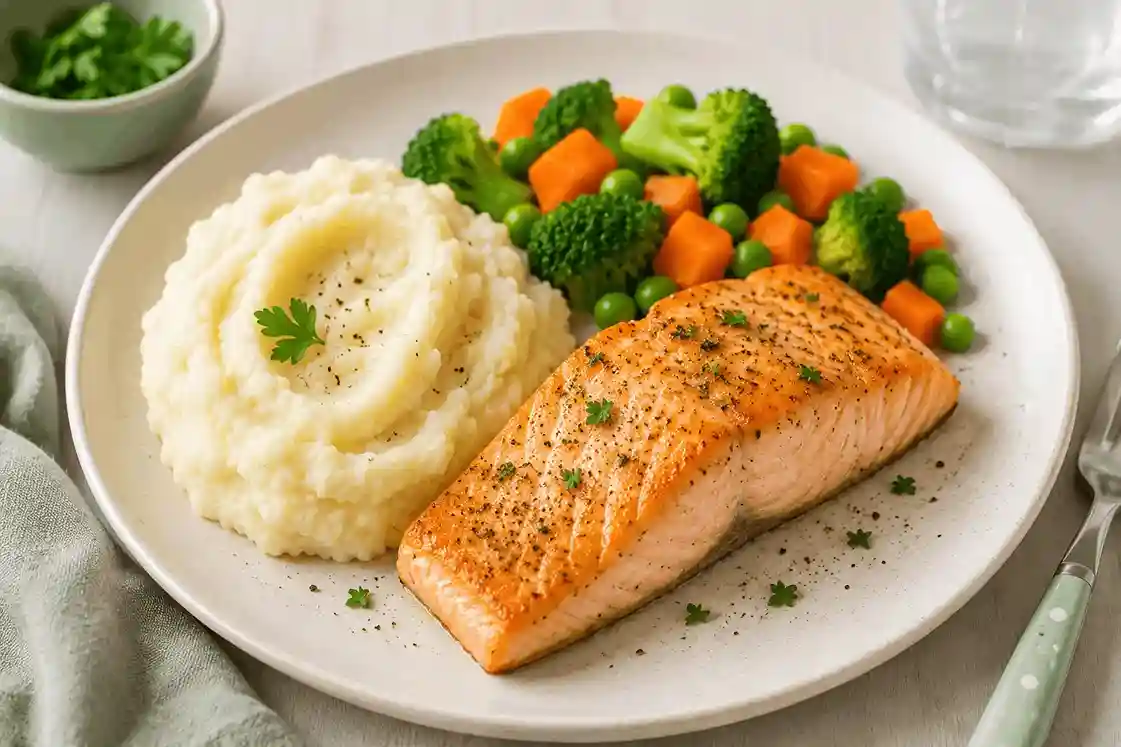
Baked Salmon with Mashed Potato: Bake a small piece of salmon until it’s just cooked. Flake it into small pieces. Serve it with creamy mashed potatoes. Salmon is a key food for healthy toddler meals. The omega-3 fatty acids help support brain development. Aim for fish once or twice a week if you can.
Day 4 (Thursday)
🥣 Breakfast
Greek Yogurt with Mango: Use plain full-fat Greek yogurt. Add fresh mango puree or mash ripe mango pieces with a fork. Quick, no cooking, and the sweet tropical flavor is popular with almost every toddler. A good option for mornings when you have about four minutes.
Morning Snack:
Soft Cooked Peas: Warm, soft-cooked peas make great finger foods for toddlers. They enjoy picking them up one by one. This also helps develop their fine motor skills. Just avoid wearing white while serving them.
Lunch:
Cheese Quesadilla: Melt mild cheese between small whole wheat tortillas. Cut into thin strips. Soft and cheesy, this easy toddler lunch is a hit, even on tough eating days. It’s simple to hold and usually well-accepted. Keep tortillas in the freezer for exactly these moments.
Afternoon Snack:
Homemade Banana Muffins: Make sugar-free banana muffins on the weekend. Freeze them individually for later. Defrost as needed. Toddlers love holding a whole muffin. It’s better than packaged options.
Dinner:
Mini Turkey Meatballs with Carrots: Mix ground turkey with grated zucchini. Form into small balls. Bake until cooked through. Serve with steamed carrot rounds. The hidden zucchini sneaks in veggies easily. It’s one of those small wins for toddler dinners that feels really satisfying.
Day 5 (Friday)
🍳 Breakfast
Mashed Boiled Egg with Toast: Soft boil an egg, mash with a fork, serve with whole wheat toast fingers. Under ten minutes, solid protein and fat start to the day. Friday morning energy is often low — this one requires minimal brain power to make.
Morning Snack:
Peach or Melon Slices: Ripe peach slices or soft melon cubes. Hydrating, naturally sweet, and genuinely quick to prepare.
Lunch:
Vegetable Soup with Mini Pasta: This easy broth features cooked carrots. It also includes zucchini and peas. Tiny pasta shapes are added and cooked until very soft. A comforting 1 year old food idea that works well on cooler days or when your toddler seems a bit off.
Afternoon Snack:
Yogurt Smoothie: Blend plain full-fat yogurt with banana and strawberries. Pour into a small cup. Great for days when your toddler avoids solid food. Liquid often goes down easier than solids. So, this choice still offers good nutrition.
Dinner:
Soft Chicken Cutlet with Broccoli: Dip thin chicken strips in egg. Then, coat them with breadcrumbs. Bake until cooked through. Serve with steamed broccoli. An easy dinner the rest of the family will also eat, meaning you are cooking one meal tonight. Always a good Friday.
Day 6 (Saturday)
🍞 Breakfast
Whole Wheat French Toast: Dip whole wheat bread in egg and milk, cook in a little butter, serve cut into strips. No sugar, no syrup — add mashed banana or berries on the side instead. A weekend breakfast that feels slightly special without being more work.
Morning Snack:
Hummus with Soft Carrot: Hummus with baked soft carrot sticks. Chickpeas are a good source of iron from plants. Most toddlers love to dip their food. It is practically a sport at this age.
Lunch:
Vegetable Pasta: Whole wheat pasta is cooked until soft. It’s mixed with a sauce made from carrots, tomatoes, and zucchini. A great way to sneak in more veggies for picky toddlers is to hide them in sauces. They usually don’t notice at all!
Afternoon Snack:
Mozzarella Cubes: Small pieces of soft mozzarella. Calcium-rich, requires zero preparation. Sometimes the best snack ideas for toddlers are the simplest ones.
Dinner:
Brown Rice with Squash and Black Beans: Soft brown rice with mashed butternut squash and well-cooked black beans. A plant-based dinner that is surprisingly filling and introduces different textures. Adding vegetarian dinners each week adds variety. It can also save money on groceries.
Day 7 (Sunday)
🥣 Breakfast
Quinoa Porridge: Cook quinoa in whole milk until it’s creamy. Then, top it with mashed blueberries and a pinch of cinnamon. Quinoa has more protein than most grains. This makes it a great choice for healthy meals for toddlers. If your toddler has not tried it before, introduce it alongside something familiar.
Morning Snack:
Soft Boiled Egg: Half a soft boiled egg cut into small pieces. One of the simplest high-protein 1 year old snacks you can offer. Half an egg is genuinely enough — remember the fist-sized stomach.
Lunch:
Avocado Toast Fingers: Mashed ripe avocado on soft whole grain toast, cut into strips. Quick, nutritious, popular with toddlers who are into self-feeding. If the avocado is perfectly ripe, this takes about two minutes.
Afternoon Snack:
Unsweetened Applesauce: Gentle on digestion and naturally sweet. Homemade is best — just cooked and blended apple. Shop-bought is fine too as long as it is genuinely unsweetened.
Dinner:
Spinach and Cheese Omelette: Whisk two eggs. Add finely chopped spinach and grated cheese. Cook until soft. Cut into small squares. Serve with steamed green beans. Spinach gives iron, eggs provide protein, and cheese adds calcium. This dish offers a balanced end to the week, all in one easy pan.
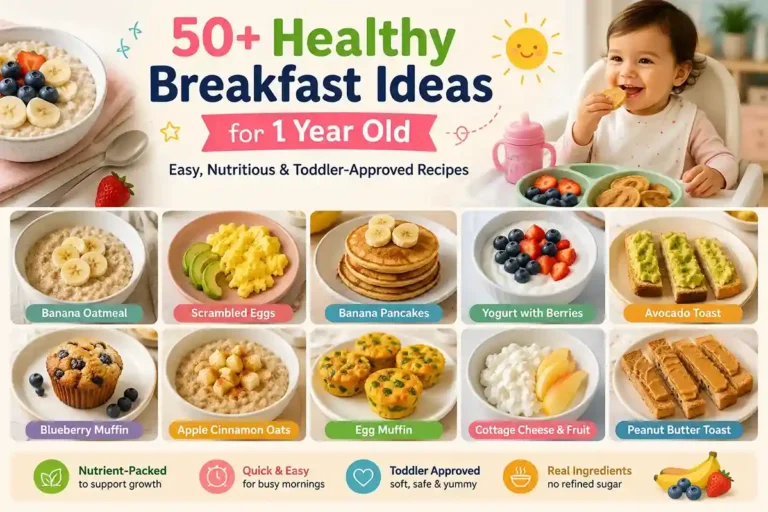
Easy Breakfast Ideas for 1-Year-Olds
If you find two or three breakfasts your toddler actually eats, stick with them and rotate. There is no rule requiring breakfast to be exciting every single day. Familiarity comforts toddlers. It helps them feel at ease at the table, leading to better eating.
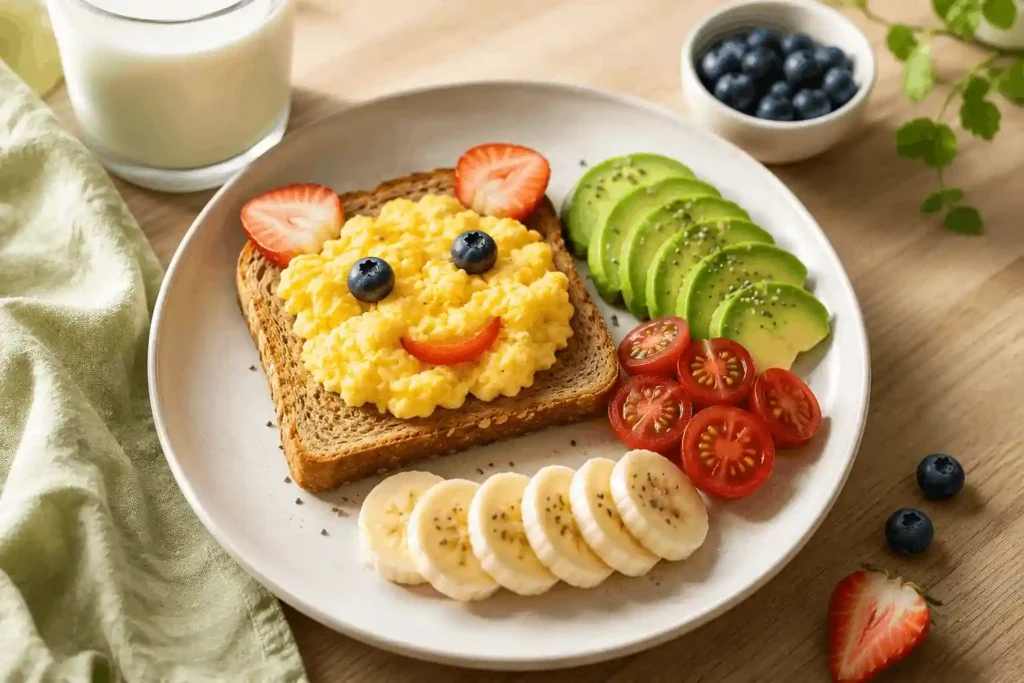
Great breakfast ideas for 1-year-olds are soft, sweet, and easy for tiny hands to grab. Banana oat porridge, scrambled eggs on toast, banana oat pancakes, and Greek yogurt with fruit are healthy choices. They provide good nutrition. Most toddlers will eat at least one or two of these without a fuss.
One practical tip: sit down and eat the same thing yourself. Toddlers are natural imitators. If they see you eating oatmeal with apparent enjoyment, they are noticeably more likely to give it a try. If you make something else while they eat alone, their meal seems less appealing.
Lunch Ideas for 1 Year Olds
Lunch should be the most substantial meal of the day for toddlers. Appetite and energy are often higher at midday than in the evening. So, this is the best time for a complete meal.
Dal and rice is one of the best toddler lunch ideas in existence, honestly. Easy to eat and digest, this dish is rich in iron and protein. You can batch-cook it, and your toddler can enjoy it with the whole family. If your household eats it regularly, that is a real advantage.
Beyond that, pasta with a vegetable-heavy sauce, soft sandwiches, egg fried rice, and lentil soup with bread for dipping all work well as lunch ideas for 1 year old rotation. The basic formula stays the same: some protein, some carbohydrate, some vegetable. Even in small amounts, covering those three things makes a genuinely balanced lunch.
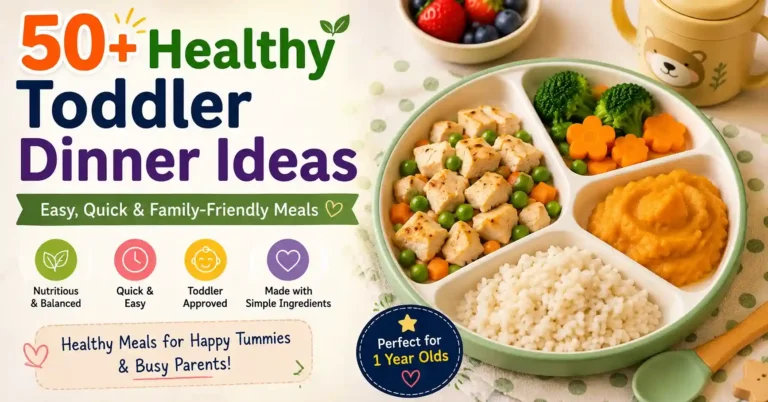
Dinner Ideas for 1 Year Old
Dinner tends to be the hardest meal of the day. By evening, toddlers feel tired—sometimes really tired. Tired toddlers won’t try new foods. They want familiar. They want soft. They occasionally want to eat only one specific thing and absolutely nothing else.
On those evenings, keep it simple. Here are some top dinner ideas for a 1-year-old. They are also family favorites. Try lentil soup, pasta, rice with chicken, or baked fish with mashed potatoes. Cook one meal. Make the toddler’s portion softer and cut it smaller. Then, sit down together at the table. Family meals, even if they’re quick and chaotic, are great for toddlers. A short meal lasting just fifteen minutes can help shape their eating habits for the long run.
Snacks for 1 Year Olds
Good snacks bridge the gap between meals without killing appetite for the next one. Timing matters — offer snacks roughly 1.5 to 2 hours after a meal. Too close and your toddler will not be hungry for lunch. Too far and they will arrive at dinner overtired and past the point of eating well.
The best snacks for a 1-year-old are simple whole foods. Try soft fruit, cheese cubes, yogurt, and steamed vegetable fingers. Rice cakes, avocado, and soft-boiled eggs also make great choices. You genuinely do not need packaged toddler snacks. Most are more expensive, more processed, and less nutritious than a banana or a small bowl of yogurt.
If your toddler is refusing most foods at mealtime, try snack time. It’s a less stressful chance to offer something new. A snack has less pressure than a full meal. This lower expectation can really help a cautious eater.
Tips for Picky Toddler Meals
Picky eating at age one is so common it is practically universal. Many toddlers refuse food at times. They often prefer just a few things or suddenly dislike foods they enjoyed last week. It’s normal for toddlers to assert their independence. Food is one of the few things they can control.
Research shows that toddlers often need to try a new food 10 to 15 times before they accept it. That doesn’t mean you need to try eating it 10 to 15 times. It means exposing yourself to it 10 to 15 times. This includes seeing it on your plate, poking it, smelling it, and maybe even licking it once.
It’s all about slowly getting familiar with the food. Keep serving meals to your picky toddler. Don’t pressure them or turn it into a battle. Also, don’t give up after two or three rejections.Eating together as a family often ranks as one of the best strategies in feeding research. Toddlers learn by watching their loved ones eat food calmly and happily.
Keep portions small. A full plate of food can genuinely feel overwhelming to a small child. Start with two or three pieces of each thing and offer more if they want it.
And please — try not to cook a completely separate meal for your toddler every night. I know it feels like the path of least resistance when they are refusing everything. But it teaches them, very quickly, that refusing food reliably produces something better. Offer what the family is eating in a toddler-appropriate form and let them decide what to do with it. Some nights they will eat enthusiastically. Some nights they will eat four peas and consider their work done. Both happen.
💡 Did You Know?
Most toddlers need to be offered a new food 8–15 times before they accept it. Don’t worry if your child refuses broccoli today—they may happily eat it next week!
Meal Prep Tips for Busy Parents
Preparing a few ingredients ahead of time can make mealtimes much easier during the week.
- Cook extra rice, pasta, or quinoa and refrigerate for up to three days.
- Steam vegetables in advance and store them in airtight containers.
- Shred cooked chicken and freeze it in small portions.
- Wash and cut fruit ahead of time for quick snacks.
- Prepare pancake or muffin batter the night before to save time in the morning.
Weekly Grocery List
This covers most of what you need for the 7-day plan. Buy seasonal when you can. It’s often cheaper, fresher, and tastier. This really helps when you want a toddler to enjoy fruits and vegetables.
Dairy and Eggs Whole milk, plain full-fat Greek yogurt, cottage cheese, cheddar cheese, mozzarella, butter, eggs (buy more than you think you need — eggs are in almost everything)
Protein Chicken breast, ground turkey, salmon fillet, lentils, black beans, chickpeas
Grains Rolled oats, brown rice, white rice, whole wheat pasta, whole wheat bread, whole wheat tortillas, quinoa, breadcrumbs
Vegetables Broccoli, carrots, sweet potatoes, regular potatoes, green peas, spinach, zucchini, tomatoes, butternut squash
Fruits Bananas, apples, pears, strawberries, blueberries, mango, peach, avocado, raspberries
Pantry Olive oil, ghee, cinnamon, unsweetened applesauce, nut butter, turmeric
Frequently Asked Questions
Final Thoughts
Feeding a 1-year-old doesn’t have to be complicated. A simple routine with healthy foods helps your toddler form good eating habits. These habits can last for years.
This 7-day meal plan aims to simplify your life. It offers quick, balanced, and family-friendly meal ideas. Remember that every child is unique, so don’t worry if your toddler doesn’t eat every meal exactly as planned. Offer a mix of wholesome foods. Stay consistent and make mealtimes fun.
Small, healthy choices each day can make a big difference in your child’s growth and development.
References
American Academy of Pediatrics (AAP)
Healthy Eating for Toddlers
Centers for Disease Control and Prevention (CDC)
Nutrition for Toddlers
National Health Service (NHS)
Feeding Your Toddler