
2 Year Old Meal Plan: A Complete 7-Day Guide for Busy Parents
🟢 Quick Facts
•By Tiny Tummies Food
•Updated July 2026
• 11 min read
|
Age |
18–36 months |
|---|---|
|
Meals Per Day |
3 meals + 2 snacks |
|
Prep Time |
10–25 minutes |
|
Difficulty |
Easy |
|
Best For |
Picky eaters, busy families, balanced nutrition |
If you thought feeding a one year old was unpredictable, welcome to two.
Two year olds have opinions. Strong ones. About food, about plates, about which spoon is acceptable today versus yesterday, about whether the banana should be whole or sliced, about the fact that the pasta is touching the peas and this is apparently a catastrophe.
My son turned two and immediately began refusing foods he had eaten happily for months. Dal that he had eaten twice a week for a year suddenly became deeply suspicious. Eggs were fine on Tuesday and completely unacceptable on Wednesday. I stood in the kitchen one evening holding a bowl of chicken and rice — a meal he had eaten without complaint approximately forty times — while he looked at it like I had placed something genuinely offensive in front of him.
This is developmentally normal. Two year olds are asserting independence, and food refusal is one of the most reliable ways they can do it. It is maddening and it is also completely expected and it does pass.
What helps more than anything else is having a solid rotation of toddler meal ideas 2 year old will actually eat — reliable meals that form the backbone of the week, alongside continued gentle exposure to variety. This guide is that rotation. A complete 7-day 2 year old meal plan with breakfast, lunch, dinner, and snacks, built around what actually works at this age.
What Changes at Age Two?
The jump from one to two brings real changes in what your toddler can eat and how they eat it.
More texture: By age two, many toddlers have several more teeth and can usually manage a wider range of soft textures. Continue adapting foods to your child’s chewing and feeding skills. Slightly firmer fruits, more varied grains, and a wider range of vegetables all become more manageable. Everything still needs to be reasonably soft — this is not yet the age for raw hard vegetables or whole nuts — but the range expands meaningfully.
Stronger opinions: This is the part nobody adequately warns you about. Two year olds develop a phenomenon called food neophobia — a genuine fear or strong resistance to new foods — that tends to peak somewhere between ages two and three. Foods that were accepted at twelve months may be suddenly refused. New foods are viewed with extreme suspicion. The same meal prepared slightly differently may be rejected. None of this is personal. None of it is permanent.
More independence: Two year olds want to feed themselves, want to choose what they eat, and want to be involved. Giving them appropriate agency — letting them choose between two acceptable options, involving them in simple food preparation, letting them serve themselves where possible — significantly improves how much they eat at mealtimes.
Family meals matter more: Research consistently shows that shared family meals become increasingly important from age two onward. Regular family meals can give toddlers opportunities to watch others eat, explore different foods, and practice positive mealtime routines.
What Does a 2 Year Old Need to Eat?
The nutritional priorities at age two are similar to age one but with some important shifts.
Iron remains critical: Iron deficiency is one of the most common nutritional concerns in toddlers globally. Lentils, chicken, red meat, eggs, spinach, beans, and iron-fortified cereals are all important sources. Pair iron-rich foods with vitamin C — tomato, strawberries, orange — to improve absorption.
Calcium for bone development: Whole milk can now be gradually transitioned to lower-fat milk if you choose, though full-fat is still absolutely appropriate. Children ages 1–3 need about 700 mg of calcium per day. Good sources include milk, yogurt, cheese, and calcium-fortified foods.
Healthy fats are still important: The brain is still developing significantly at age two. Avocado, full-fat dairy, olive oil, eggs, salmon, and nut butters are all excellent fat sources. At age two, milk choices can vary based on your child’s individual needs. Talk with your pediatrician about whether whole or lower-fat milk is appropriate for your child.
Protein for growth: Eggs, chicken, fish, lentils, beans, dairy, and tofu all provide protein for the rapid growth that continues through the toddler years.
Fruits and vegetables — variety over volume: The goal at age two is not a large volume of vegetables but regular exposure to a wide variety. Different colors provide different nutrients. Keep offering what gets refused alongside what gets accepted — the research shows consistent exposure matters more than any particular strategy.
Fiber: Whole grains — oats, brown rice, whole wheat bread, whole grain pasta — provide fiber and steady energy. Two year olds tend to do well with the slightly chewier texture of whole grains compared to younger toddlers.
How Much Should a 2 Year Old Eat?
About 1,000 to 1,400 calories per day is the general guidance for two year olds, though this varies considerably based on size, activity level, and individual metabolism. Tracking calories is neither necessary nor recommended — a better approach is offering a variety of nutritious foods and trusting your toddler to regulate their own intake.
How many calories does a 2 year old need on any given day depends on how active they have been. A day with a lot of outdoor running around will produce a hungrier toddler than a quiet indoor day. Both are normal.
Portion sizes at two are still small — about half to two-thirds of an adult portion at most. A typical 2 year old meal plan covers three small meals and two snacks per day, with each meal being roughly a quarter to a third of what an adult might eat.
The biggest shift from age one is that two year olds can tolerate slightly longer gaps between eating — the rigid 2-3 hour schedule of infancy loosens somewhat, though consistent meal and snack times still produce the best eating behavior.
Foods to Avoid at Age Two
Most of the restrictions from age one are still relevant at two, with a few updates:
Whole or large pieces of nuts — these can remain choking hazards for young children. Use finely chopped nuts or thinly spread smooth nut butter instead, when appropriate for your child’s allergy history and developmental skills.
Added salt — toddler kidneys are still developing. Keep salt minimal and avoid heavily processed foods with high sodium content.
Added sugar — not necessary and creates sweet preferences that are hard to reverse. Natural sweetness from fruit is sufficient.
Whole grapes and hard round foods — still need to be cut. The round shape is still a choking hazard even with more teeth.
Sugary drinks — water and plain milk are the best everyday beverage choices. Juice is not necessary, and if you offer 100% fruit juice, keep the amount limited.
Ultra-processed foods as a staple — occasional packaged convenience food is fine, but a diet heavily reliant on processed toddler meals, packaged snacks, and convenience foods lacks the nutritional diversity that supports development at this age.
The 7-Day Meal Plan
This plan is designed to be realistic for actual busy families — not a perfect nutritional masterpiece every day, but a solid week of varied, nutritious meals that most two year olds will eat at least some of. Swap days around, repeat what works, skip what does not suit your family.
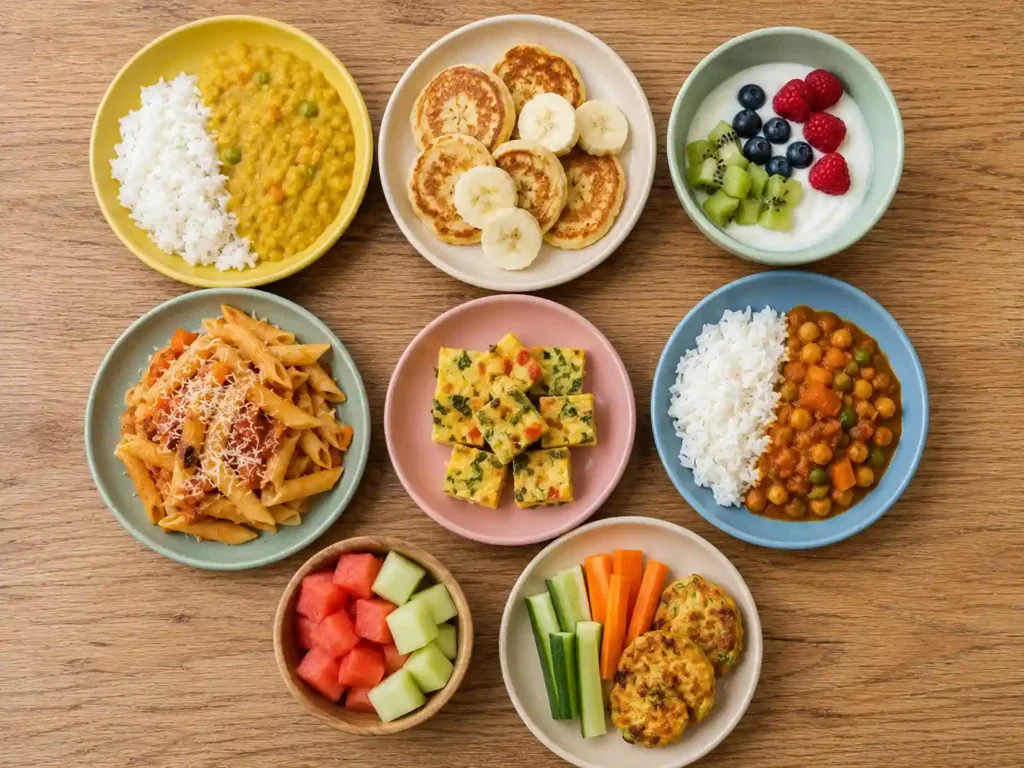
Week at a Glance
This meal plan is a general example, not a prescription. Appetite and nutritional needs vary from child to child. Adjust portions, textures, ingredients, and meal timing based on your child’s needs and feeding skills.
|
Day |
Breakfast |
Snack 1 |
Lunch |
Snack 2 |
Dinner |
|---|---|---|---|---|---|
|
Monday |
Banana oat porridge + blueberries |
Cheese + ripe pear |
Dal chawal + soft peas |
Banana muffin |
Pasta with hidden veg sauce |
|
Tuesday |
Scrambled eggs + whole wheat toast |
Greek yogurt + strawberries |
Chicken and rice bowl |
Avocado + crackers |
Lentil soup + soft bread |
|
Wednesday |
Banana oat pancakes + yogurt |
Soft fruit plate |
Khichdi + soft carrots |
Mini egg muffin |
Baked salmon + mashed potato + peas |
|
Thursday |
Oatmeal + mango |
Hummus + soft carrot |
Cheese quesadilla + avocado |
Banana + nut butter toast |
Chicken and vegetable curry mild + rice |
|
Friday |
Greek yogurt + banana + oats |
Blueberries + cheese |
Pasta with pesto + peas |
Sweet potato fingers |
Egg and veggie frittata + soft bread |
|
Saturday |
French toast strips + berries |
Cottage cheese + soft fruit |
Lentil and vegetable soup + bread |
Mini banana muffin |
Mild shepherd’s pie + soft veg |
|
Sunday |
Quinoa porridge + blueberries |
Soft boiled egg + pear |
Avocado toast + soft tomato |
Rice cake + nut butter |
Family chicken stew + rice |
Day 1 — Monday
Breakfast:
Banana Oat Porridge with Blueberries
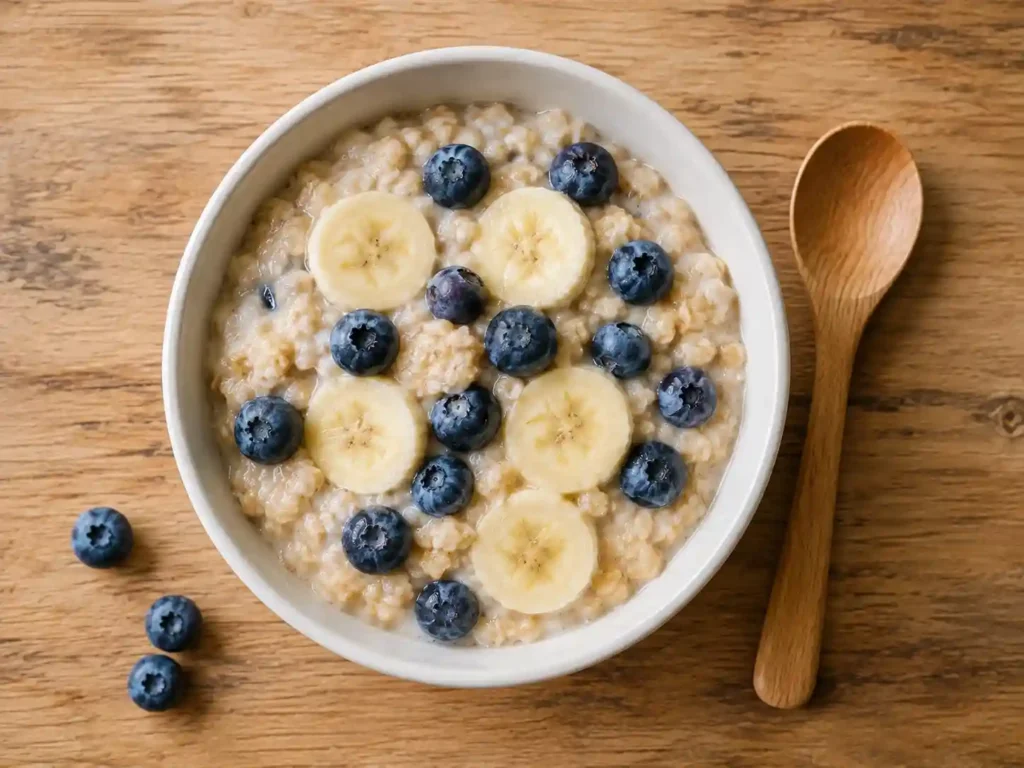
Cook rolled oats in whole milk until soft, mash in half a ripe banana, top with a handful of blueberries. The classic — still works at two, still works at three, probably still works at five. My son ate this so many times I started to feel guilty and then I checked the nutrition and stopped feeling guilty immediately.
Morning Snack:
Cheese and Ripe Pear
Small cubes of mild cheddar alongside ripe pear pieces cut small. Zero cooking, high protein and calcium, done in two minutes.
Lunch:
Dal Chawal with Soft Peas
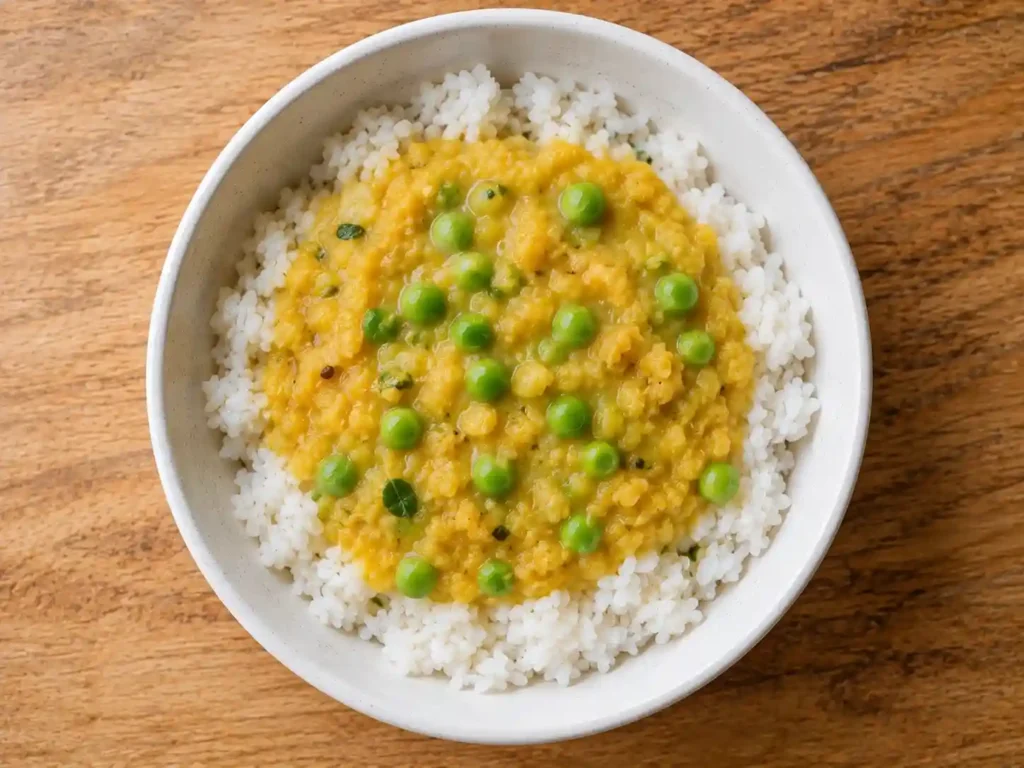
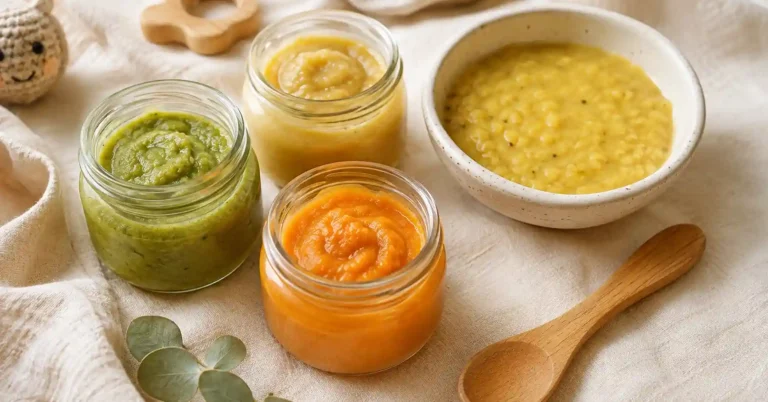
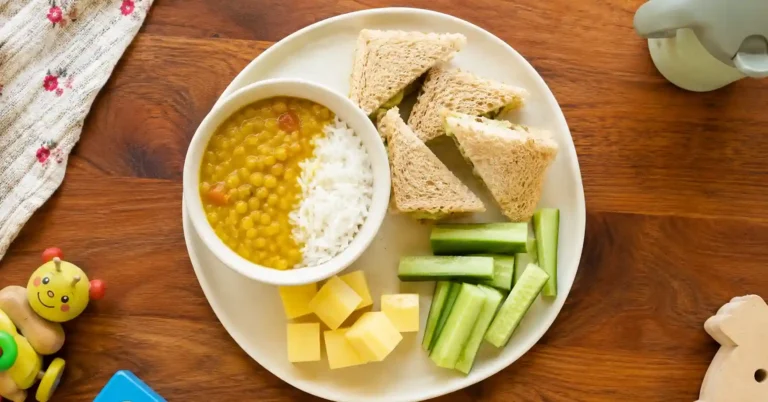
Cook moong dal until very soft with turmeric, serve over soft rice with soft cooked peas and a drizzle of ghee. One of the most nutritious meals for 2 year olds in existence. Iron, protein, fiber, complex carbs — all in one bowl that costs almost nothing to make and reheats from the fridge in two minutes.
Afternoon Snack:
Banana Muffin
A mini banana oat muffin from the freezer, defrosted at room temperature. Soft, filling, naturally sweet.
Dinner:
Pasta with Hidden Vegetable Sauce
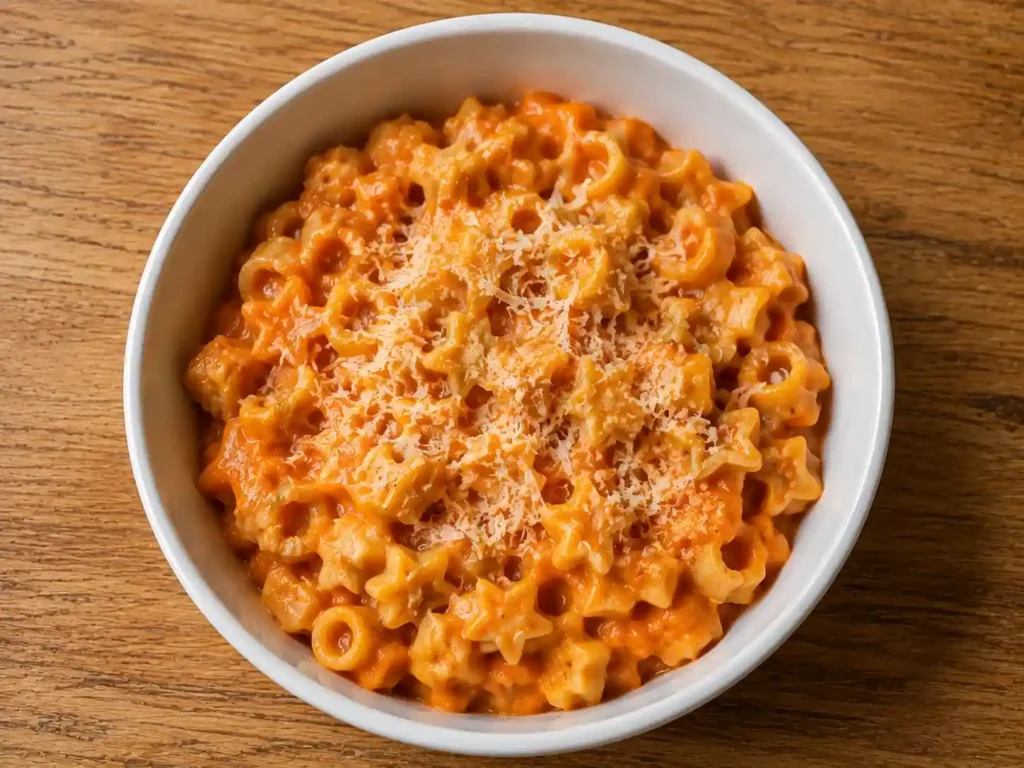
Blend cooked tomatoes, red lentils, carrots, and olive oil into a smooth sauce. Toss with small soft pasta shapes. The lentils are completely invisible but add significant protein and iron. This is one of those easy toddler meals that feels like a victory every time — your two year old just ate lentils and has no idea.
Day 2 — Tuesday
Breakfast:
Scrambled Eggs with Whole Wheat Toast
Soft scrambled eggs with whole wheat toast fingers. Classic, reliable, high in protein. At two, most toddlers can manage slightly larger pieces of toast than at one — still cut appropriately but the strips can be a little wider.
Morning Snack:
Greek Yogurt with Strawberries
Plain full-fat Greek yogurt with ripe strawberries cut into small pieces. Calcium, protein, vitamin C.
Lunch:
Chicken and Rice Bowl
Shredded soft chicken over soft rice with whatever soft cooked vegetables are available — peas, carrots, or spinach. Drizzle with olive oil. One of the most reliably accepted lunch ideas for 2 year old — mild, familiar, and filling.
Afternoon Snack:
Avocado and Crackers
Mashed ripe avocado alongside a couple of soft oat crackers. Healthy fat, fiber, and complex carbs.
Dinner:
Lentil Soup with Soft Bread
Red lentils blended with cooked carrots and a little cumin into a smooth soup. Serve with a piece of soft whole wheat bread for dipping. Warming, iron-rich, and something tired two year olds often accept more readily than solid foods at the end of a long day. Make a big batch and freeze half for next week.
Day 3 — Wednesday
Breakfast:
Banana Oat Pancakes with Yogurt
Mini banana oat pancakes alongside a small pot of plain yogurt. Cut pancakes into pieces rather than strips now that the pincer grasp is stronger. A breakfast that works for the whole family — everyone eats the same thing.
Morning Snack:
Soft Fruit Plate
A small selection of whatever ripe soft fruit you have — mango, banana, blueberries, ripe pear. Quick, nutritious, and something most two year olds accept readily even on difficult food days.
Lunch:
Khichdi with Soft Carrots
Rice and lentils cooked together until very soft with finely chopped carrots or peas. Ghee on top. A one-pot lunch that covers iron, protein, fiber, and carbs. One of the best toddler meals for picky eaters because the mild familiar flavors are hard to refuse.
Afternoon Snack:
Mini Egg Muffin
A batch-baked savoury egg muffin from the fridge. Protein and vegetables in a handheld format.
Dinner:
Baked Salmon with Mashed Potato and Peas
Bake salmon at 180°C for 12-15 minutes, flake into pieces. Serve with creamy mashed potato and soft steamed peas. Omega-3 for brain development, carbs from the potato, fiber from the peas. Aim to include fish at least once a week — it is one of the most important healthy toddler meals for brain development at this age.
Day 4 — Thursday
Breakfast:
Oatmeal with Mango
Cooked oats in whole milk topped with ripe mango pieces or mango puree. Naturally sweet, rich in vitamin A from the mango, and a good variation when banana oat porridge starts to feel repetitive.
Morning Snack:
Hummus with Soft Carrot
Smooth hummus with soft steamed carrot sticks for dipping. Plant-based protein and iron from the chickpeas, beta-carotene from the carrot.
Lunch:
Cheese Quesadilla with Avocado
Mild cheese melted in a small whole wheat tortilla, served with ripe avocado slices on the side. Four minutes to make, protein and calcium from the cheese, healthy fat from the avocado. One of the most popular lunch ideas for two year olds because most toddlers love the cheesy flavor.
Afternoon Snack:
Banana with Nut Butter Toast
Ripe banana slices alongside soft whole wheat toast with nut butter spread very thinly. Protein, healthy fat, and natural sweetness.
Dinner:
Mild Chicken and Vegetable Curry with Rice
Diced chicken and soft vegetables — sweet potato, peas, carrots — in a very mild tomato-based sauce with turmeric and cumin but no chili. Serve over soft rice. Adults can add heat to their own portions separately. One of the best family friendly dinner ideas that works at any age at the table.
Day 5 — Friday
Breakfast:
Greek Yogurt with Banana and Oats
Plain full-fat Greek yogurt with ripe banana pieces and a small amount of soft oats mixed in. High protein, calcium, and complex carbs — a solid start to a Friday when energy for cooking breakfast is typically at its lowest.
Morning Snack:
Blueberries and Cheese
A handful of blueberries alongside small cubes of mild cheese. Serve ripe blueberries in a size and texture your child can manage safely. If you’re unsure, mash or cut them before serving.
Lunch:
Pasta with Pesto and Peas
Soft pasta tossed with a small amount of mild homemade pesto and soft cooked peas. Healthy fat from the olive oil in the pesto, plant protein from the peas. A quick toddler meal that comes together in about ten minutes.
Afternoon Snack:
Sweet Potato Fingers
Pre-baked sweet potato strips from the fridge served at room temperature. Rich in vitamin A, naturally sweet, and easy to hold.
Dinner:
Egg and Vegetable Frittata with Soft Bread
Whisked eggs with finely chopped soft vegetables and grated cheese, baked in an oven-safe pan at 180°C for 15 minutes. Cut into squares. Serve with soft bread. A genuinely easy healthy toddler meal that covers protein, iron, and vegetables in one pan.
Day 6 — Saturday
Breakfast:
French Toast Strips with Berries
Whole wheat bread dipped in whisked egg and milk, cooked in a little butter. Cut into strips. Serve alongside mixed soft berries. A weekend breakfast that feels a bit more special without requiring much effort.
Morning Snack:
Cottage Cheese with Soft Fruit
Plain cottage cheese alongside soft ripe fruit — pear, mango, or peach. High in protein and calcium, zero cooking.
Lunch:
Lentil and Vegetable Soup with Bread
Same soup as Tuesday dinner if you froze half — or make fresh. Red lentil soup blended smooth with carrot and cumin, served with soft bread for dipping. Iron, protein, fiber, and vitamin A.
Afternoon Snack:
Mini Banana Muffin
Another muffin from the freezer batch. The reliability of having these ready is worth the Sunday batch cooking every single week.
Dinner:
Mild Shepherd’s Pie with Soft Vegetables
Finely minced lamb or beef with soft vegetables in a simple tomato-based sauce, topped with creamy mashed potato. Set aside the toddler portion before adding salt. A family friendly dinner recipe that covers protein, carbs, and vegetables in one dish and that everyone at the table eats together.
Day 7 — Sunday
Breakfast:
Quinoa Porridge with Blueberries
Cook quinoa in whole milk until creamy, top with mashed blueberries and a pinch of cinnamon. More protein than most grains, and a good way to vary the morning grain rotation at the end of the week.
Morning Snack:
Soft Boiled Egg with Ripe Pear
Half a soft boiled egg cut into pieces alongside ripe pear pieces. Protein and healthy fat from the egg, natural sweetness from the pear.
Lunch:
Avocado Toast with Soft Tomato
Mashed avocado on soft whole grain toast with very small soft tomato pieces. Cut into manageable pieces. Healthy fat, complex carbs, and vitamin C from the tomato.
Afternoon Snack:
Rice Cake with Nut Butter
A rice cake with a thin layer of smooth nut butter. For outings, pack it according to your usual food-safety and storage practices.
Dinner:
Family Chicken Stew with Rice
Chicken pieces with soft vegetables slow cooked in a simple broth until completely tender. Serve over soft rice. The chicken falls apart at this stage of cooking — perfect texture for two year olds without any extra effort. Cook once, everyone eats together, the leftovers become Monday’s lunch. One of the best easy toddler meals in the rotation precisely because it is also excellent for the whole family.
Breakfast Ideas for 2 Year Olds
Breakfast at two is similar to breakfast at one with more variety available. Two year olds can handle more textures and flavors, which opens up the rotation considerably. The breakfasts that work best are still soft, naturally sweet, and familiar — reliability matters at breakfast because the morning is usually already complicated enough without a food battle before 8am.
Best breakfast rotation for 2 year olds: banana oat porridge, scrambled eggs on toast, banana oat pancakes, Greek yogurt with fruit, oatmeal with mango, French toast strips, quinoa porridge. Rotate through these over two weeks and most two year olds will eat at least some version of most of them without a fight.
One thing that genuinely helps at this age: involve your toddler in choosing. Offer two options — “do you want porridge or eggs today?” — and let them pick. The sense of agency dramatically improves acceptance of whatever they choose. It sounds too simple to make a real difference, but it consistently does.
Lunch Ideas for 2 Year Olds
Lunch ideas for 2 year old feeding work best when they include something familiar alongside something slightly less familiar. A bowl of dal and rice alongside a piece of new vegetable they have never tried has much better odds than a completely unfamiliar meal.
The best toddler lunch ideas 2 year old rotation covers: dal and rice, pasta with vegetable sauce, chicken and rice bowl, khichdi, cheese quesadilla, lentil soup with bread, and simple sandwiches with soft fillings. These seven options alone give you a full week of varied, nutritious lunches without any repetition.
At two, lunch is still the best time for the most nutritionally complete meal. Energy and appetite are usually both higher at midday than at dinner, which means this is the meal where most two year olds eat the most and try the widest variety of foods.
Dinner Ideas for 2 Year Olds
Dinner ideas for two year olds need to account for the tired evening reality more than lunch does. By the time dinner arrives, most two year olds are running on depleted energy reserves and the self-regulation that holds things together during the day starts to come apart.
Try offering dinner at a consistent time that fits your family’s routine. If your toddler is very tired by the evening, serving dinner a little earlier may make mealtimes easier.
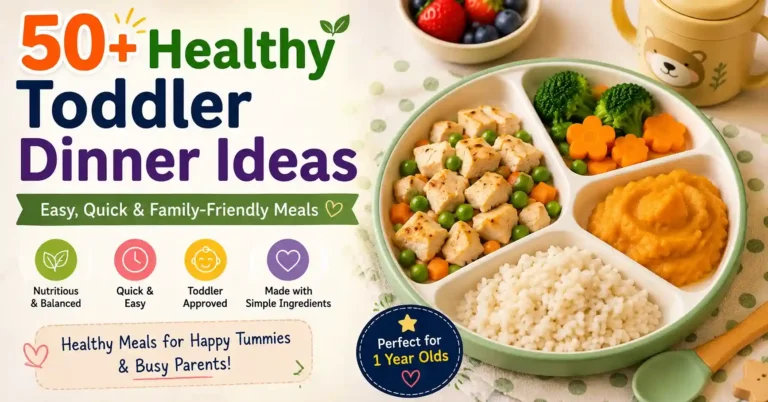
The best dinner recipes for 2 year olds are also the most family-friendly ones: pasta, lentil soup, chicken curry, shepherd’s pie, fish with mashed potato, egg frittata. Cook one meal, adapt the toddler’s portion by removing before adding heavy salt or spice, and eat together at the table. Family dinners at this age are one of the most reliable things you can do for a two year old’s long-term eating habits.
Snacks for 2 Year Olds
Snacks for 2 year olds follow the same principles as at age one — two structured snacks per day, offered about 1.5 to 2 hours after a meal, combining protein or healthy fat with fruit or vegetable where possible.
What changes at two is that toddler snack ideas 2 year old can include slightly more variety and texture. Snacks that were too complex at one become more manageable at two — slightly chewier fruit, more varied crackers, small amounts of whole grain cereal with milk.
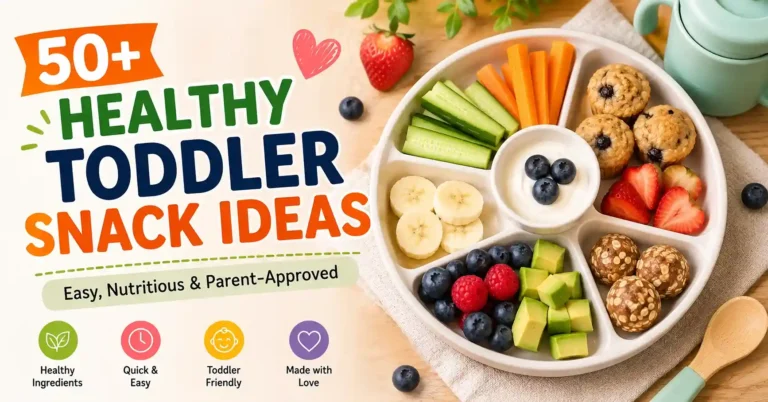
Best snacks for two year olds: plain yogurt with fruit, mild cheese cubes, ripe banana, hummus with soft bread or crackers, homemade muffins, soft fruit plate, soft boiled egg, avocado with crackers, steamed sweet potato fingers, and nut butter on soft toast. These ten options cover most nutritional bases and give you a solid rotation across the week.
Meals for Picky 2 Year Olds
Picky toddler meals at age two deserve honest, practical advice. Peak food neophobia — the developmental resistance to new foods — typically arrives somewhere around age two and can be genuinely alarming for parents who watched their one year old eat enthusiastically and now cannot get them to try anything new.
A few things that are genuinely true and worth knowing:
This phase almost always passes: Picky eating is common during the toddler years, and many children become more willing to try different foods as they grow. Continue offering variety without pressure.
Repeated exposure can help — but slowly: Toddlers may need repeated, low-pressure exposure to a new food before they decide to try it. Keep offering unfamiliar foods alongside foods they already enjoy, without forcing a bite.
Family meals can help: Eating together gives toddlers an opportunity to watch others eat, explore different foods, and practice positive mealtime routines. Keep the atmosphere relaxed and avoid pressuring your child to eat.
The division of responsibility matters: Your job is to decide what food is offered, when it is offered, and where. Your two year old’s job is to decide whether to eat it and how much. Pressuring, bribing, and cajoling consistently backfire. Offer the meal, eat together, stay calm, clear the plates when everyone is done.
Reliable meals for picky 2 year olds: cheese pasta, banana oat pancakes, dal and rice, scrambled eggs on toast, plain rice with butter and peas, chicken and rice, mild cheese quesadilla. If your toddler reliably eats these seven things, you have a workable rotation and a reasonable nutritional baseline while you continue offering variety alongside.
Weekly Grocery List
This covers most of what you need for the 7-day plan above.
- Dairy and Eggs Whole milk, plain full-fat Greek yogurt, cottage cheese, mild cheddar cheese, mozzarella, butter, eggs
- Protein Chicken breast or thighs, salmon fillet, minced lamb or beef, lentils (red and moong), black beans, chickpeas
- Grains Rolled oats, brown rice, white rice, whole wheat pasta, whole wheat bread, whole wheat tortillas, quinoa, oat crackers, rice cakes
- Vegetables Broccoli, carrots, sweet potatoes, regular potatoes, green peas, spinach, zucchini, tomatoes, butternut squash
- Fruits Bananas, apples, pears, strawberries, blueberries, mango, peach, avocado
- Pantry Olive oil, ghee, cinnamon, unsweetened applesauce, nut butter, turmeric, cumin, oat flour
Meal Prep Tips
Toddler meal prep ideas for two year olds are essentially the same as for one year olds — the goal is having batch-cooked components ready in the fridge so weekday meals come together quickly rather than requiring full cooking from scratch every evening.
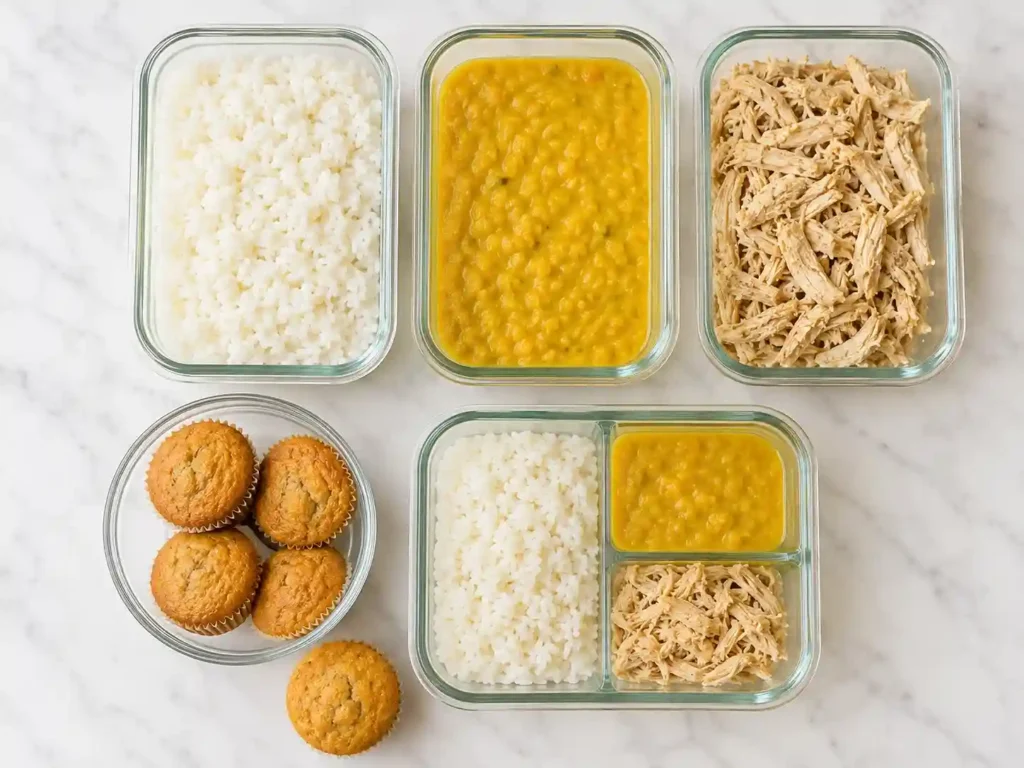
Batch cook dal every Sunday: A large pot covers multiple lunches and dinners, refrigerates for three days, freezes for three months. The highest-return investment in toddler meal prep that exists.
Cook a big batch of rice or quinoa: Refrigerates for three days, reheats with a splash of water, forms the base of rice bowls, egg fried rice, khichdi, and countless other quick meals.
Freeze blended vegetable sauce: A large batch of blended tomato and vegetable sauce with red lentils blended in, frozen in ice cube trays. Pasta dinner in ten minutes from frozen, any night of the week.
Batch bake banana muffins and egg muffins: Make both on Sunday. Freeze individually. Snacks and breakfast sorted for most of the week.
Shred a whole chicken: Freeze in small bags. Reheat as needed for rice bowls, soup, sandwiches, and curry without any additional preparation.
Steam vegetables in advance: Carrots, sweet potato, broccoli, and peas all keep well for two to three days refrigerated. Having soft vegetables ready means adding them to any meal takes thirty seconds.
Frequently Asked Questions
One Last Thing
Feeding a two year old is not always going to be smooth. There will be weeks where the rotation works beautifully and everyone eats reasonably well and you feel like you have this figured out. And then there will be weeks where everything gets refused, familiar foods become suddenly unacceptable, and dinner ends with someone crying — and it might not be the toddler.
Both phases are completely normal. Both pass.
Keep dal in the fridge. Keep mild cheese and eggs stocked. Keep banana muffins in the freezer. Have a rotation of seven or eight toddler meal ideas 2 year old reliably eats, and return to them without guilt on the difficult weeks. The goal is not a perfect varied diet every single day — it is a consistently nutritious, low-pressure mealtime environment where your toddler gradually builds a broader and more comfortable relationship with food.
That takes time. It is happening, even on the days when it does not feel like it.
This article is for general informational purposes only and does not replace advice from your child’s pediatrician or a registered dietitian. If you have any concerns about your toddler’s nutrition, growth, or feeding, please speak to a qualified healthcare professional.
Sources: American Academy of Pediatrics | World Health Organization | Centers for Disease Control and Prevention