
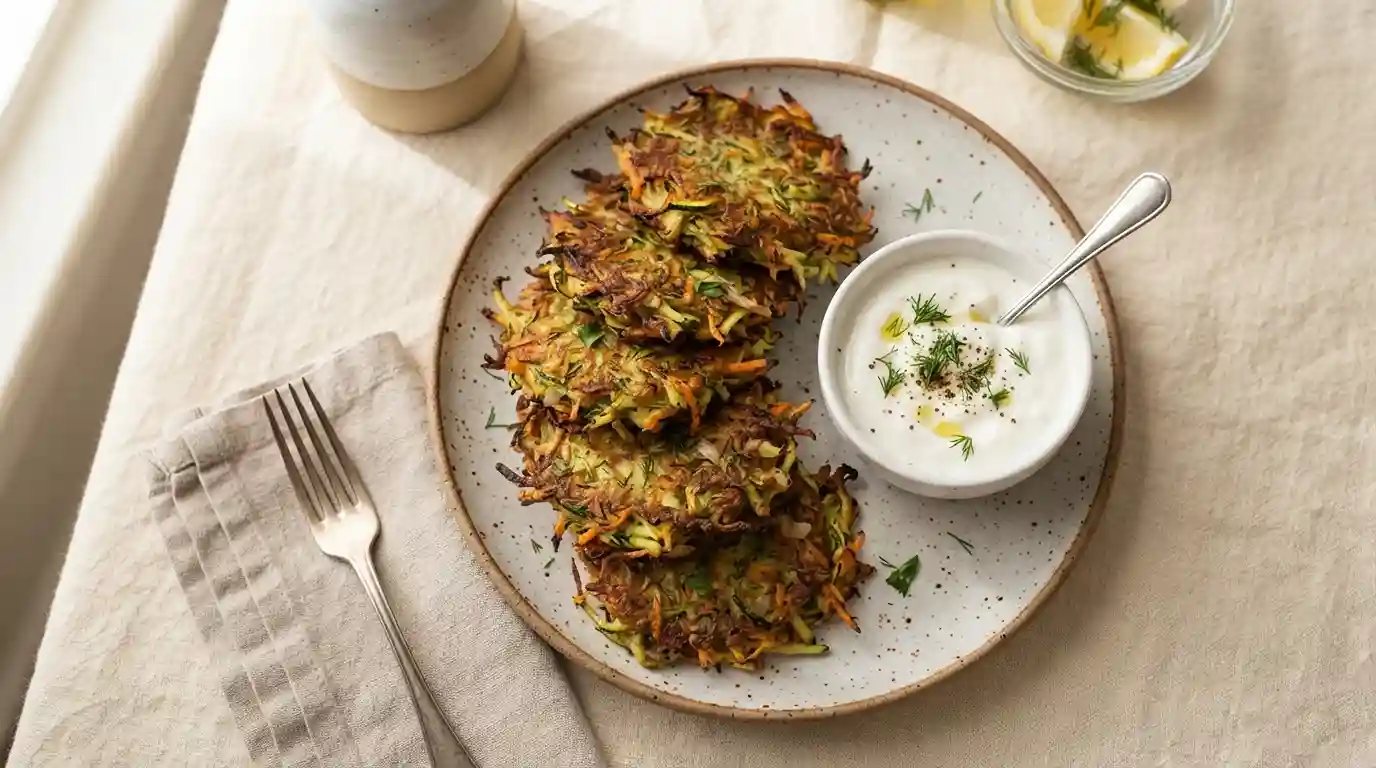
Toddler Veggie Fritters (Baked or Pan-Fried, Freezer-Friendly)
Grated zucchini and carrot don’t exactly scream “toddler food” on their own, but turn them into crispy little Toddler Veggie Fritters, and suddenly they’re something my daughter asks for by name. I’ve stopped trying to understand the logic of what makes a vegetable acceptable versus what gets flung across the room — I just know these fritters work, and I make a double batch every time for exactly that reason.
They come together fast, use vegetables you probably already have in the fridge, and freeze well enough that “what’s for lunch” stops being a daily decision.
🟢 Quick Look
|
Prep Time |
15 minutes |
|
Cook Time |
15 minutes |
|
Total Time |
30 minutes |
|
Difficulty |
Easy |
|
Servings |
About 12 small fritters (4 toddler servings) |
|
Why Make This |
Sneaks in vegetables without hiding them, freezer-friendly, works for lunch or snack |
Why This Recipe Works for Toddlers
- Familiar shape. A small, flat patty is easy for little hands to hold and dip, without needing a fork.
- Mild flavor. No strong seasoning, so even picky eaters tend to give these a chance.
- Flexible vegetables. Zucchini and carrot are the base, but you can rotate in whatever needs using up.
- Freezer-friendly. A batch made ahead means lunch is just a few minutes of reheating.
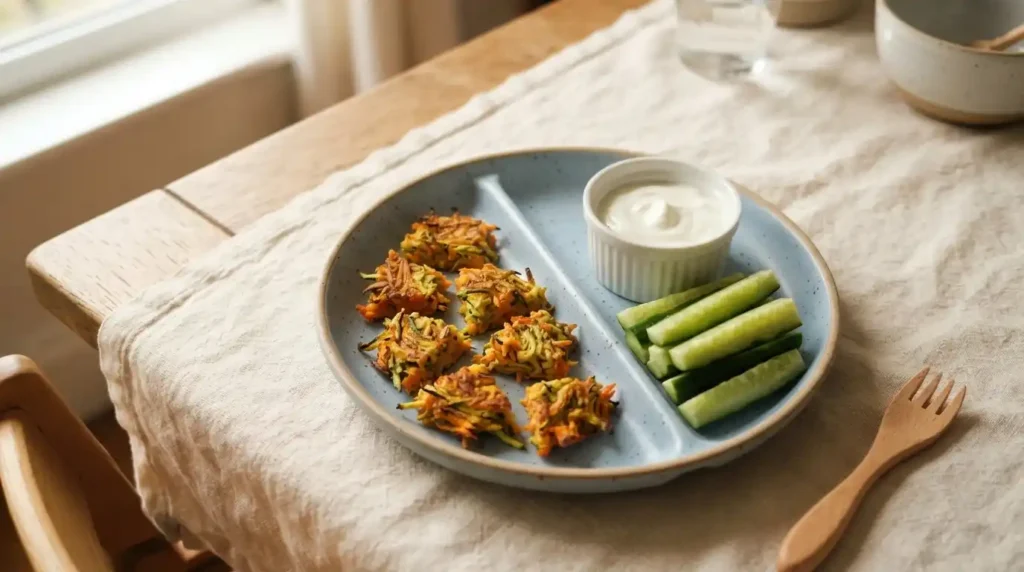
As with most single foods, these work best served alongside a dip and something else on the plate — a bit of yogurt or hummus rounds things out nicely.
Ingredients You’ll Need
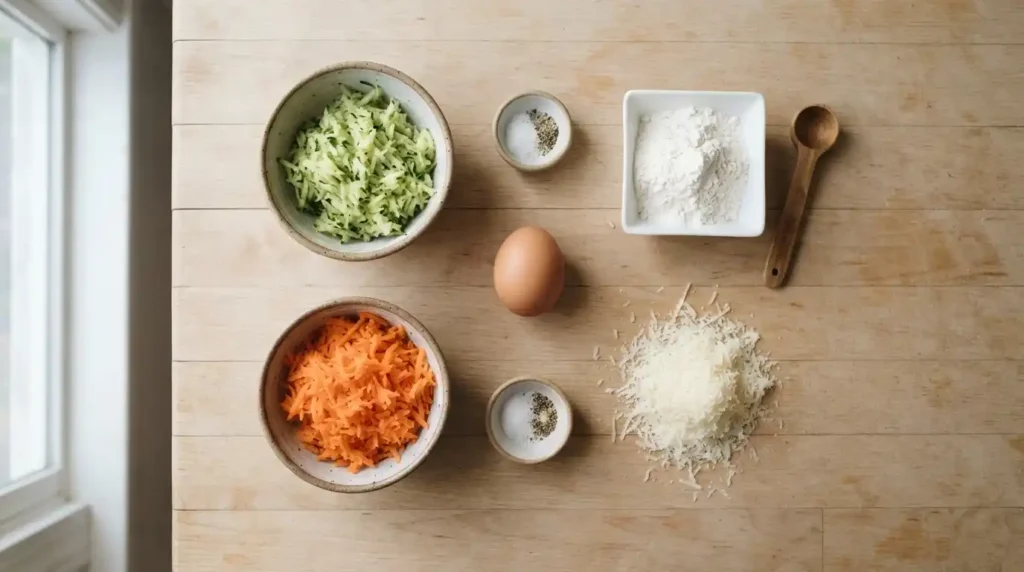
- 1 medium zucchini, grated
- 1 medium carrot, grated
- 1/4 cup all-purpose flour (or chickpea flour for a different flavor and extra protein)
- 1 large egg
- 2 tablespoons grated parmesan (optional)
- A pinch of salt (optional, only a small amount for toddlers)
- Olive oil, for the pan
How to Make Toddler Veggie Fritters

Steps to Pan-Fry
- Grate and drain. Grate the zucchini and carrot, then squeeze the zucchini in a clean kitchen towel to remove excess water — this step matters more than it seems, since skipping it leads to soggy fritters.
- Mix. In a bowl, combine the grated vegetables, flour, egg, parmesan, and a small pinch of salt until just combined.
- Shape. Scoop small portions and flatten into little patties, about 2 inches wide.
- Cook. Heat a thin layer of olive oil in a skillet over medium heat. Cook fritters for 3-4 minutes per side, until golden and cooked through.
- Drain. Transfer to a paper towel-lined plate to remove excess oil before serving.
Steps to Bake
For a lighter option, you can bake these toddler veggie fritters instead of pan-frying them.
- Preheat the oven to 400°F (200°C). Line a baking sheet with parchment paper.
- Shape the fritters into small, toddler-friendly patties and place them on the prepared baking sheet.
- Lightly brush or spray the tops with a little olive oil to help them brown.
- Bake for 8–9 minutes, then carefully flip each fritter.
- Bake for another 7–9 minutes, or until the fritters are cooked through and lightly golden around the edges.
- Let them cool for a few minutes before serving. Check that they are soft enough for your toddler to chew comfortably.
Toddler Veggie Fritters
Ingredients
Equipment
Method
- Grate and drain. Grate the zucchini and carrot, then squeeze the zucchini in a clean kitchen towel to remove excess water — this step matters more than it seems, since skipping it leads to soggy fritters.2. Mix. In a bowl, combine the grated vegetables, flour, egg, parmesan, and a small pinch of salt until just combined.3. Shape. Scoop small portions and flatten into little patties, about 2 inches wide.4. Cook. Heat a thin layer of olive oil in a skillet over medium heat. Cook fritters for 3-4 minutes per side, until golden and cooked through.5. Drain. Transfer to a paper towel-lined plate to remove excess oil before serving.
Video
Notes
- Fridge: Store in an airtight container and use within 3 days.
- Freezer: Freeze in a single layer on a tray, then transfer to a freezer and use with in 2 months.
- Reheat: Warm from frozen in the oven at 375°F (190°C) for 8-10 minutes, or in an air fryer for 5-6 minutes, until heated through and crisp again.
Serving Ideas for Toddlers
- Cut larger fritters into smaller pieces for younger toddlers.
- Serve with a small dish of plain yogurt or a mild hummus for dipping.
- Pair with rice and dal for a more complete meal, or with fruit for a simple lunch. Our toddler lunch ideas guide has more pairing ideas like this one.
- For a South Asian twist, swap the parmesan for a pinch of cumin and coriander, closer to a mild vegetable pakora — still no heavy spice, just a different flavor note.
Keep mealtimes seated and supervised, and let your toddler’s current chewing ability guide how small you cut each piece.
Storage and Freezer Instructions
- Fridge: Store in an airtight container and use within 3 days.
- Freezer: Freeze in a single layer on a tray, then transfer to a freezer and use within 2 months.
- Reheat: Warm from frozen in the oven at 375°F (190°C) for 8-10 minutes, or in an air fryer for 5-6 minutes, until heated through and crisp again.
Easy Variations
- Chickpea flour version: Swap regular flour for chickpea flour (besan) for a slightly different texture and more protein — this is closer to a traditional vegetable pakora.
- Different vegetables: Grated sweet potato, finely chopped spinach, or corn all work well in place of or alongside the zucchini and carrot.
- Dairy-free: Skip the parmesan — the fritters hold together fine without it.
- Baked instead of pan-fried: Bake at 400°F (200°C) for 15-18 minutes, flipping halfway, for a lower-mess version.
A Note on Food Safety
- Keep mealtime seated and supervised.
- Cut fritters into pieces sized for your toddler’s current chewing ability rather than relying on age alone.
- Let toddler veggie fritters cool to a safe, warm temperature before serving — the centers hold heat longer than the crispy edges suggest.
- These fritters contain egg, a common food allergen. If your toddler has a known egg allergy, avoid this recipe unless your healthcare provider says egg is safe. If you’re introducing egg for the first time, the CDC’s guidance on introducing potentially allergenic foods can help you know what to watch for.